Selina Trepp
August 27, 2024
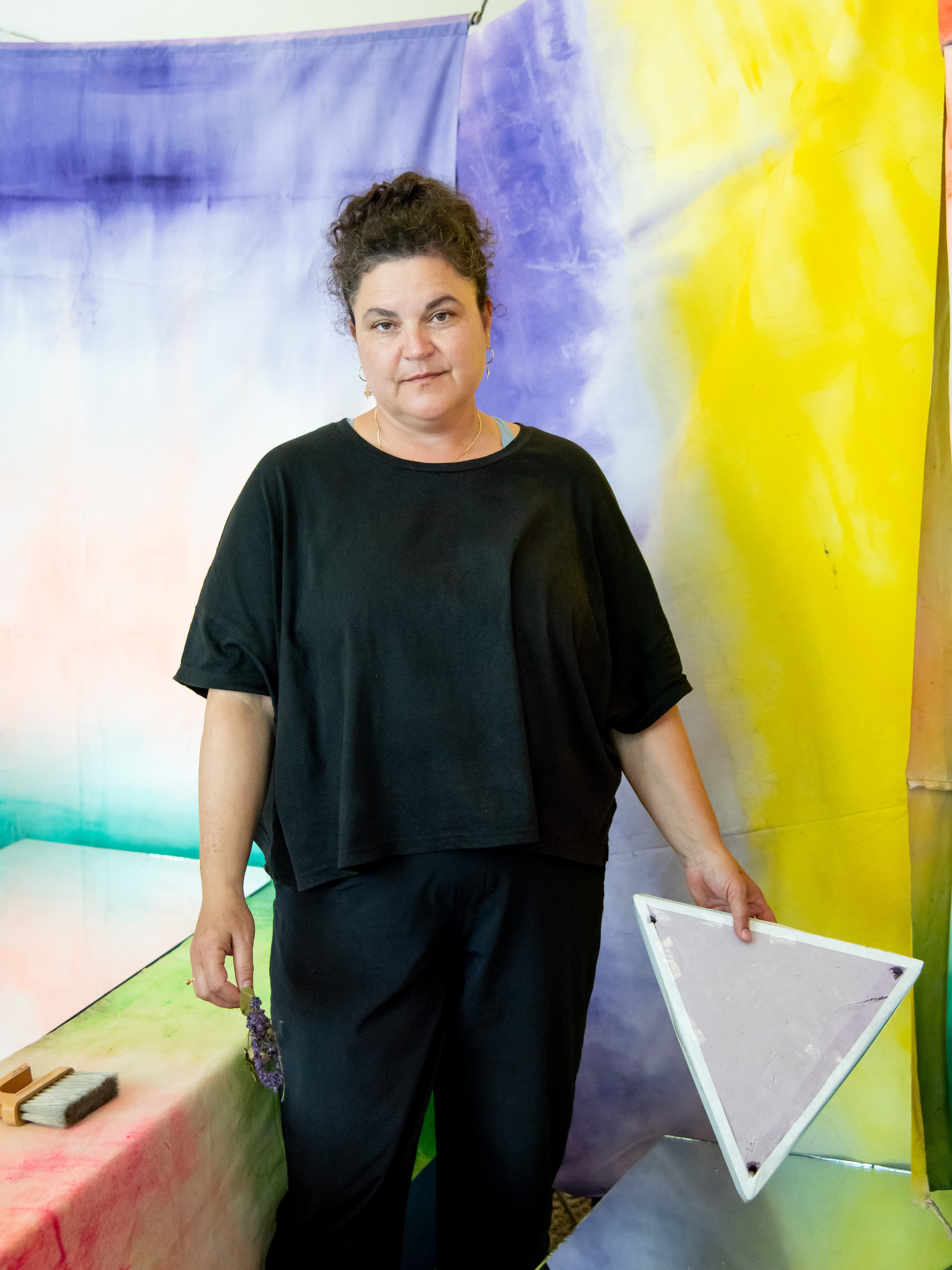
SELINA TREPP (Swiss/American b.1973) works across media and space; combining performance, installation, painting, and sculpture to create intricate setups that result in photos, drawings and animations. Selina sees art primarily as a creative problem-solving process, as she continually finds new ways to express ideas within her means and abilities at any given moment. Since 2012, she has practiced a self-imposed limitation of using only materials found within her studio, which provides the conceptual backbone to her studio practice while allowing her to address both political and poetic concerns simultaneously. She aims to empower people through her art by making work that is exciting yet achievable, demonstrating that anyone could do what she does with patience and determination.
OtherPeoplesPixels: “The studio is a self-depleting system” is a phrase you use to describe your commitment to only working with materials already present in your studio since 2012. You’ve imposed this reality upon yourself, but somehow I feel it imbues you with this position as an all-powerful creator. What was your original motivation and how has it felt to work within this limitation?
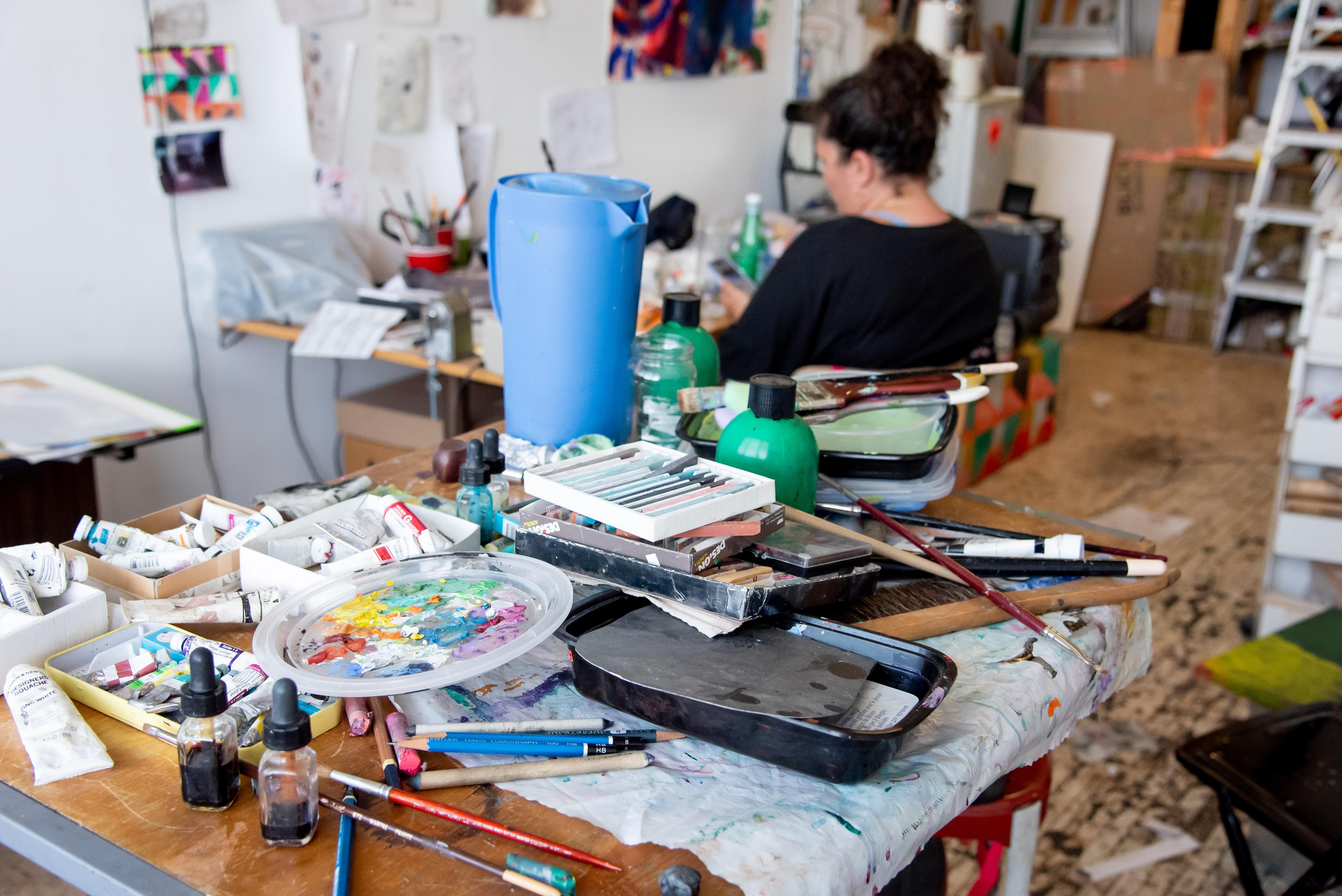
Selina Trepp: I'm the queen of my realm, and my realm is limited to my studio. I don't experience it as limiting. In fact, it's been surprisingly a joyful experience throughout. In 2012, I decided I will bring no more materials into my studio except for what I wear and what I eat. No screws, no paint, no paper, no nothing. This happened at a moment in my life when I had a lot of stuff, but I had also recently finished graduate school, and I was wondering how to have a practice without institutional support or a lot of money.
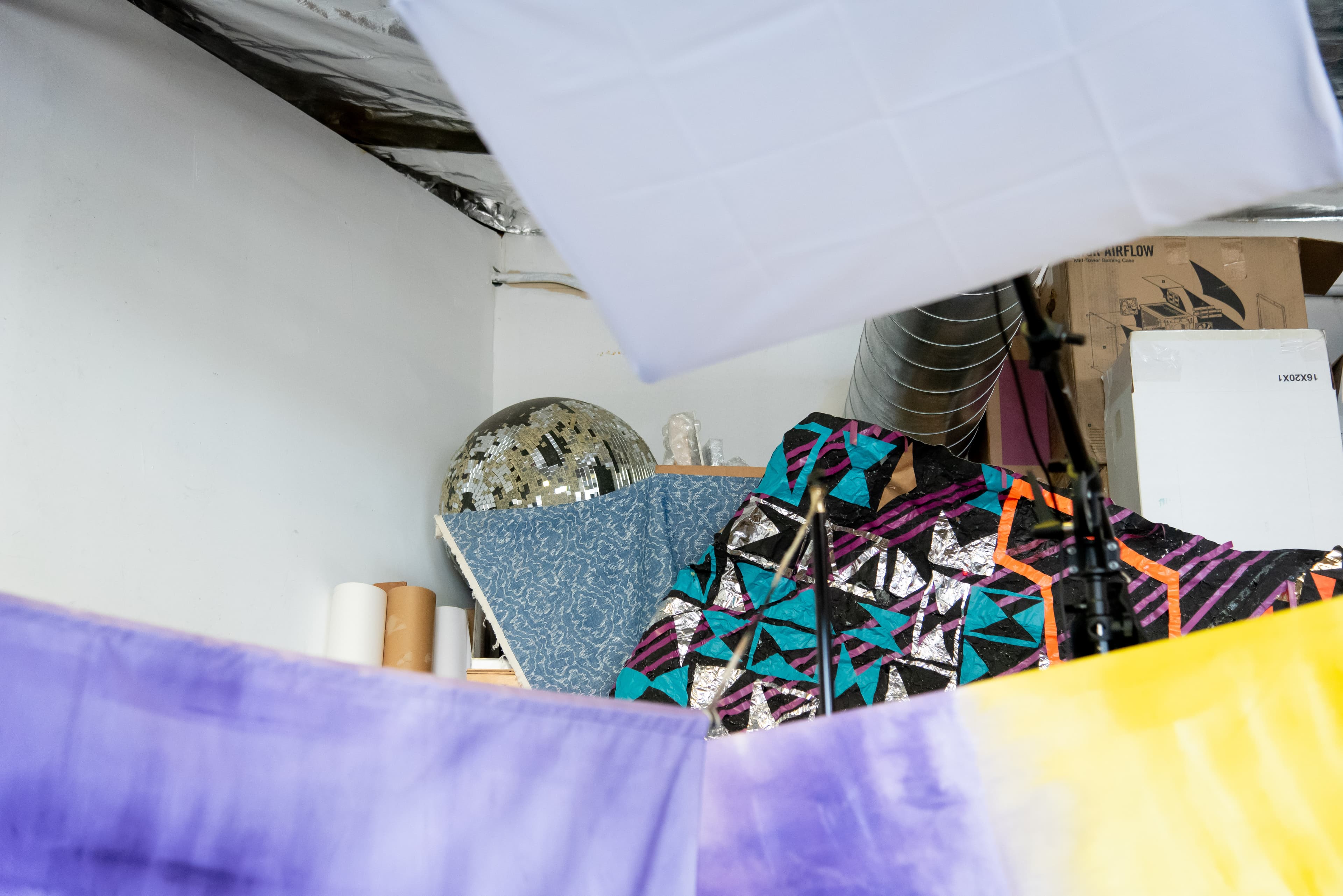
Many makers experience issues just being able to produce in the way that they want. I find that conversation is an interesting one, but it can also feel really futile. So, I asked myself, what do I think that art is primarily? I realized that, for me, art has always been a creative problem-solving process. Often, that problem-solving is about perspective, and finding if you can't do it one way, you find another way.
I’ve mostly thought of myself as a conceptual artist. Making physical sculptures has never been my primary motivation. It's more like there's a certain idea that I want to express, and then I find the way that I can do it within whatever my means and my abilities are at that moment. If I have money, I might hire people to produce things for me. If I don't have money, I might make it out of clay or whatever I have on hand. I want to show that it's not so much about what you have, but what you do with what you have.
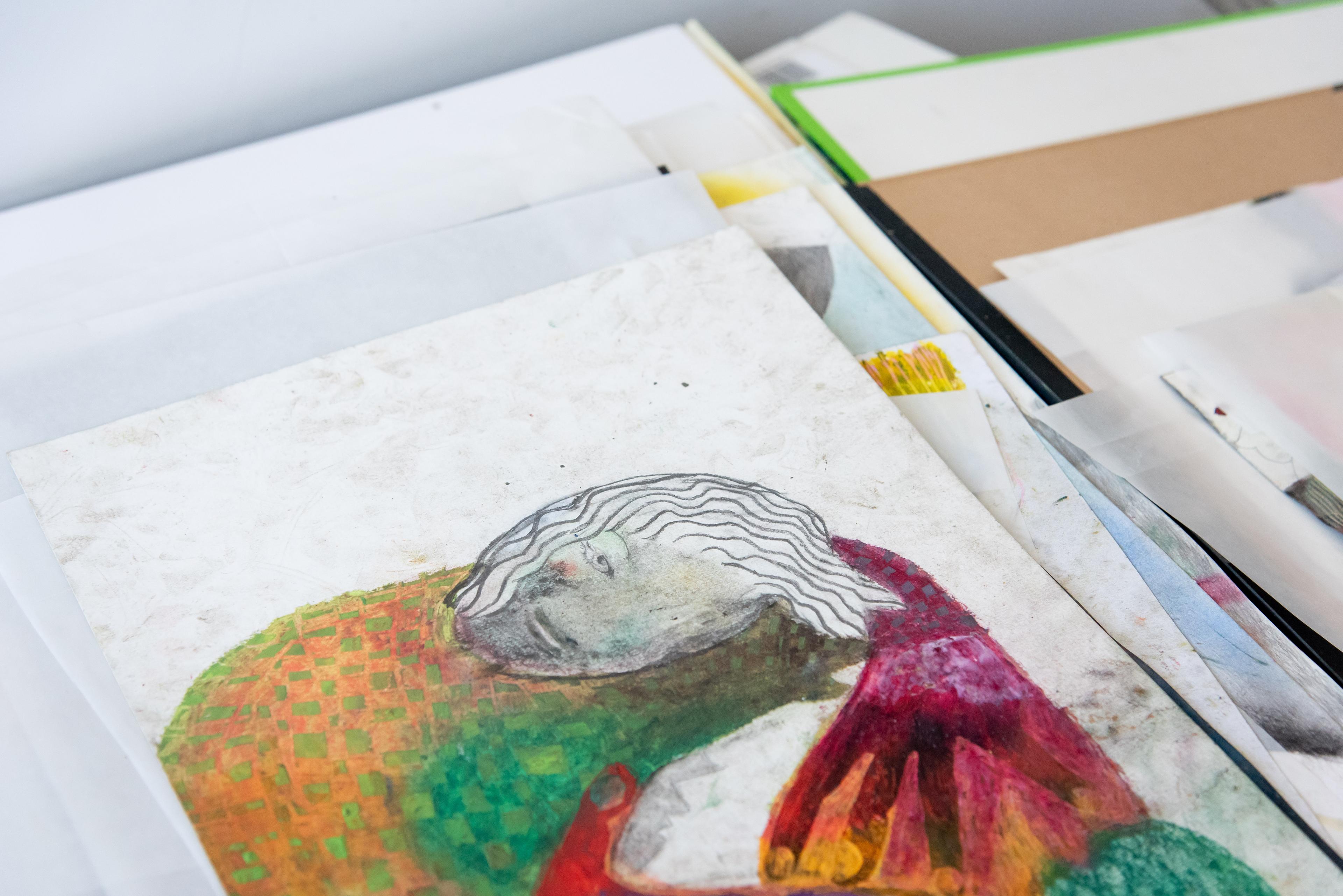
What is the real strength of art, and what is its value to begin with? I think this is a question that happens very often from the outside, but also from the inside. Do I think art is valuable as a career so I can become a rich person with a townhouse in New York City, a fancy car, and a place in Long Island? I can rub shoulders with the rich and the beautiful, and I might make work for billionaires that will adorn their luxury complex. Is that what I want? I actually find that really gross, but I also want to make a living. In this situation, the purpose of art is to create value, and in my heart of hearts, I don't believe that that's the only purpose of art.
Art allows people to see things differently, and it allows us, as artists, to empower people through art. The way I do that is by making work that is both exciting and achievable. There's nothing about what I do that somebody else could also do. I'm just working with what I have really hard, and I'm not giving up.
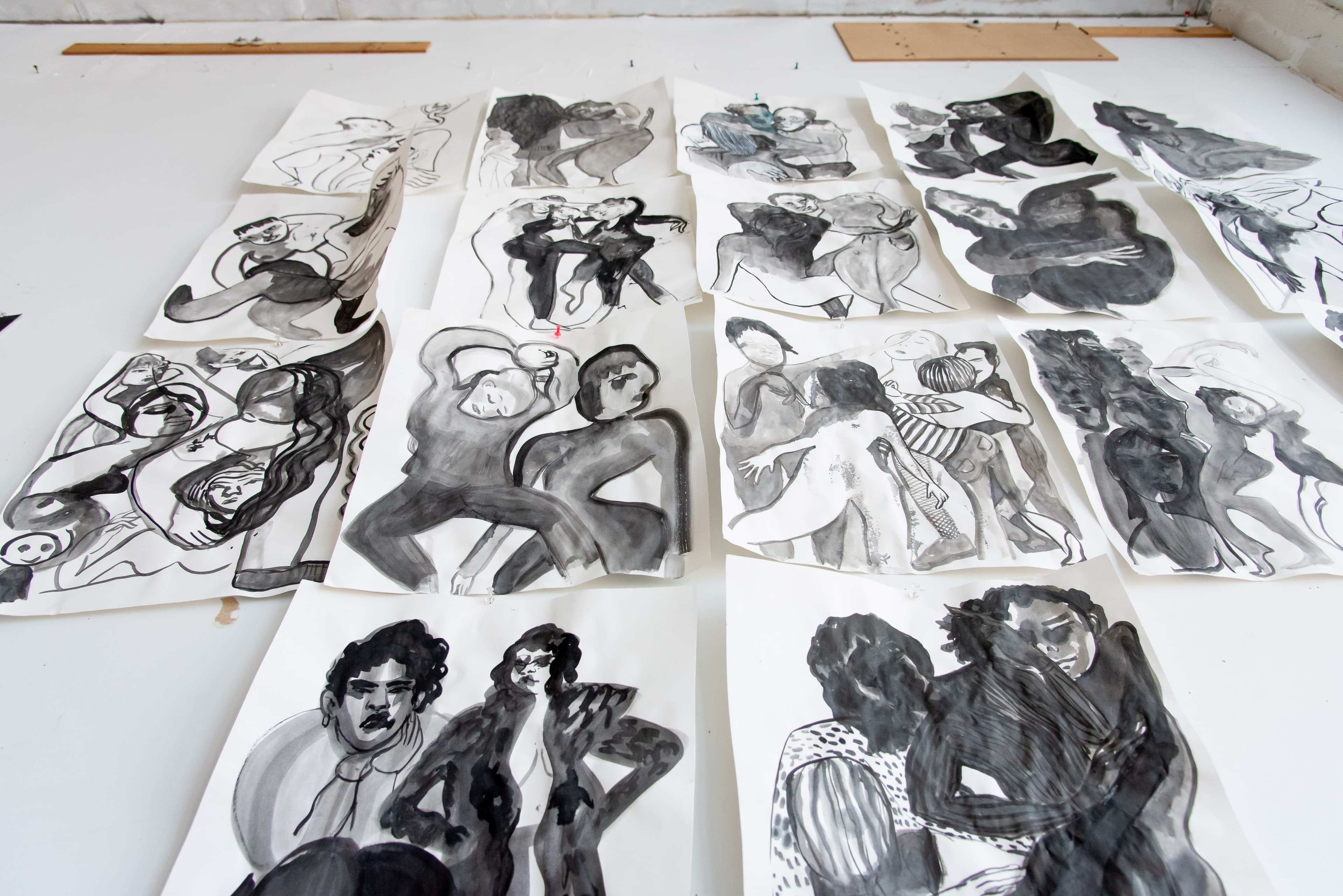
My practice exists within this severe framework which is the material reality of my studio. This gives my work conceptual backbone and completely liberates me. Regardless of what I do, it always points towards this idea. I have always struggled with being both politically and poetically minded, and figuring how to have these two things happen at the same time in a productive way. This allows that for me, because the politics of my work are in the production of my work.
OPP: That's the funny thing about intention versus chance. Sometimes the possibilities are too big so you design a system of limitations, and then something flowers out of that which you never saw coming.
ST: Absolutely. I also never established an ending point. The hypothetical ending point for the practice has always been if and when it's no longer productive. As things run out, and many things have, I have to decide how to proceed. If I have no more white paint, do I buy white paint or do I just deal with it? Perhaps I find a box of oil pastels and that puts me on a whole new trajectory.
I actually had a material influx recently. My mother is also an artist, and she lived between Switzerland and the United States for most of her life. She always had studios in both places, but recently decided to give up her US studio. Instead of shipping everything back to Switzerland, she gave me her supplies. This is conceptually super interesting to me, and it was also exactly ten years of not having anything new.
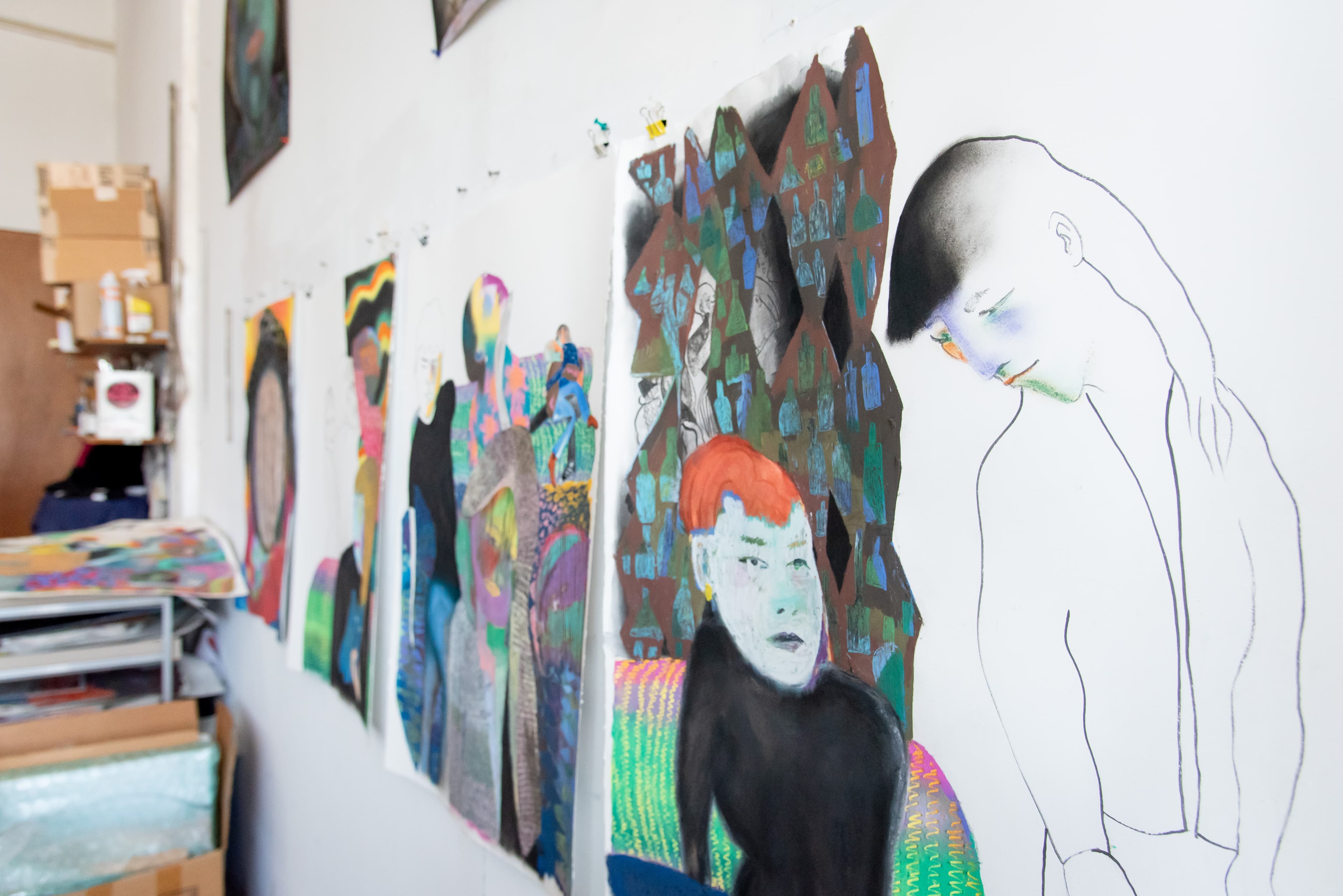
My mother is a very different artist than me, and she works with very different materials and colors. I've spent the last year learning how to use what she’s given me. I’m also figuring out what I want to do now that I have more choices, and yet I didn't exactly choose these things. They were given to me, like an inheritance. My mother is still very much alive and making really great work right now, so it's also a conversation with her about our diverse practices and my lineage as a third-generation artist.
OPP: I’m intrigued by the relationship between your work Thinking About Inheritance and a defined period of gestation. In that series of videos you draw self-portraits onto your reflection in a mirror during the time you were pregnant with your daughter. The experience of motherhood for me has fueled introspection so much more than any other. It's as if that which molded me is playing out alongside these formative moments for something that you are creating in the present. It makes time feel very blurry!
ST: I agree. I think parenting is both a inward and outward experience. Outward in the sense that it's put me into contact with a much wider segment of society than before. I’m navigating the public school system and in Maxine's case, the autism community. I’m also inwardly understanding myself and my parents in a new way. That is continuously profound. The experience of seeing people grow up is incredible–the exhaustion of it all, the hardness and softness of the experience of parenthood. I find relativity in relation to my art, which is so much about being egocentric.
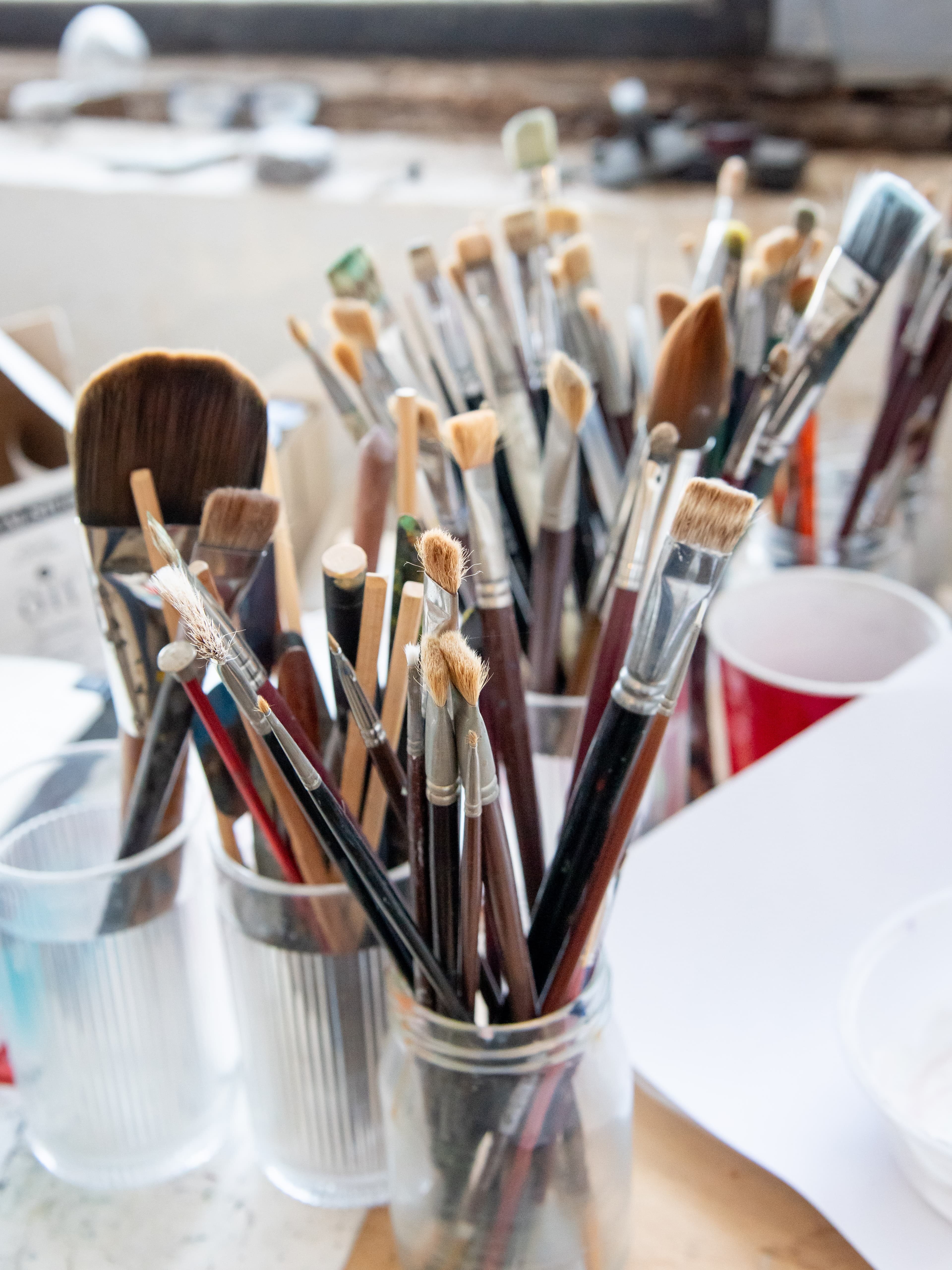
Thinking about inheritance was shot over the nine months of my pregnancy, which is funny because you can only really see it when I walk in and out, and I get a little bit bigger every time. It was about inheritance in a personal and familial way, but also as an artist. There exists a primacy of painting both within art history, but also within my own family. They are all painters, and when I was growing up and developing as an artist, it was always very clear that I would not paint.
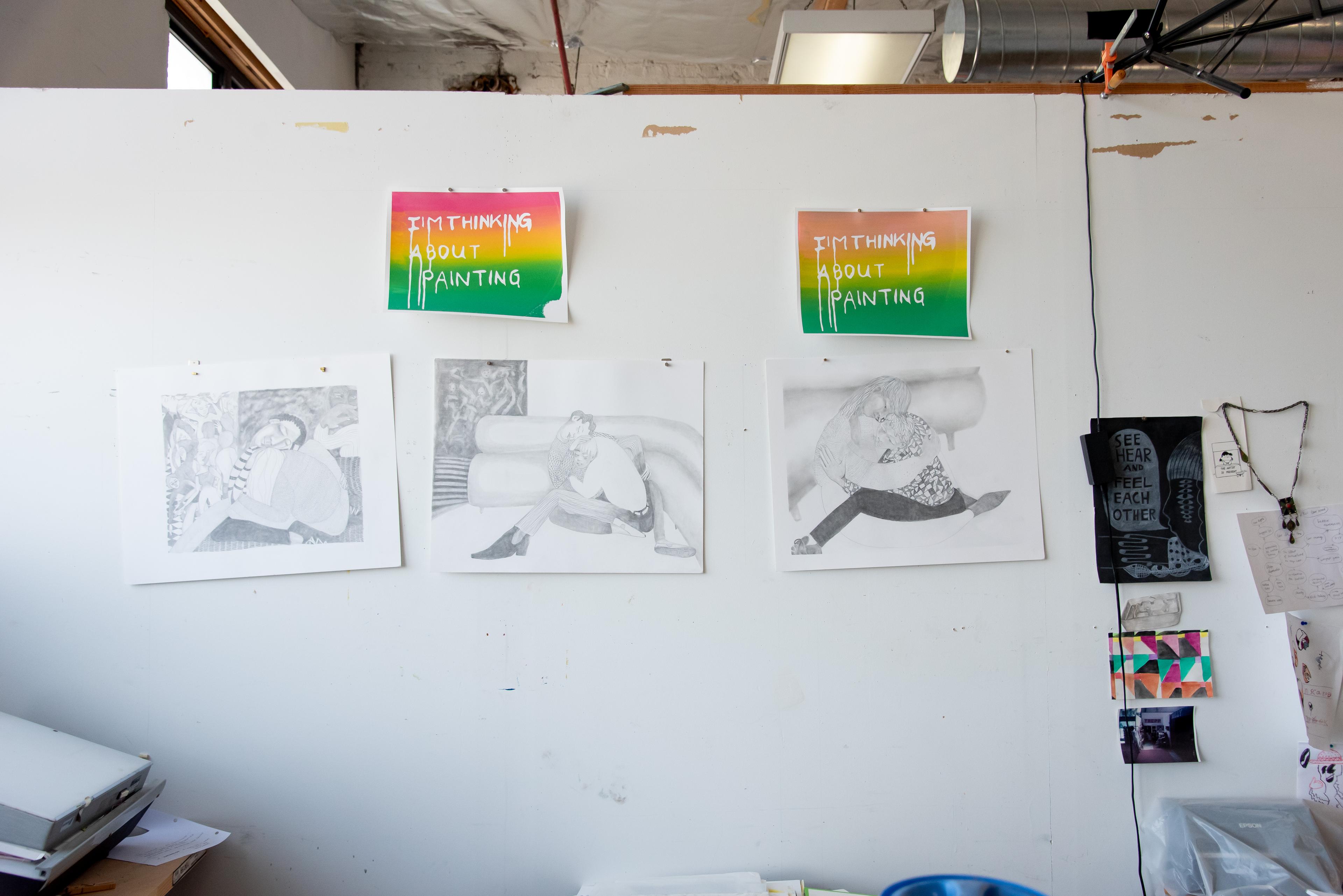
It felt extremely transgressive to me to paint, and painting was something I had always refused to do because of my family. There is also the history of painting, and I come from a scene that really questioned the primacy of painting through performance or happenings. What is the function of a painting and how does it relate to capitalism and consumption? What if an artwork is an experience that you experience, and then it's over? It's consumable only in a very limited way. Thinking about inheritance was all of those things and also a way to see myself during that time. In my work, I've always tried to capture the important historical moments for me. On a purely personal level, that's the document of my pregnancy.
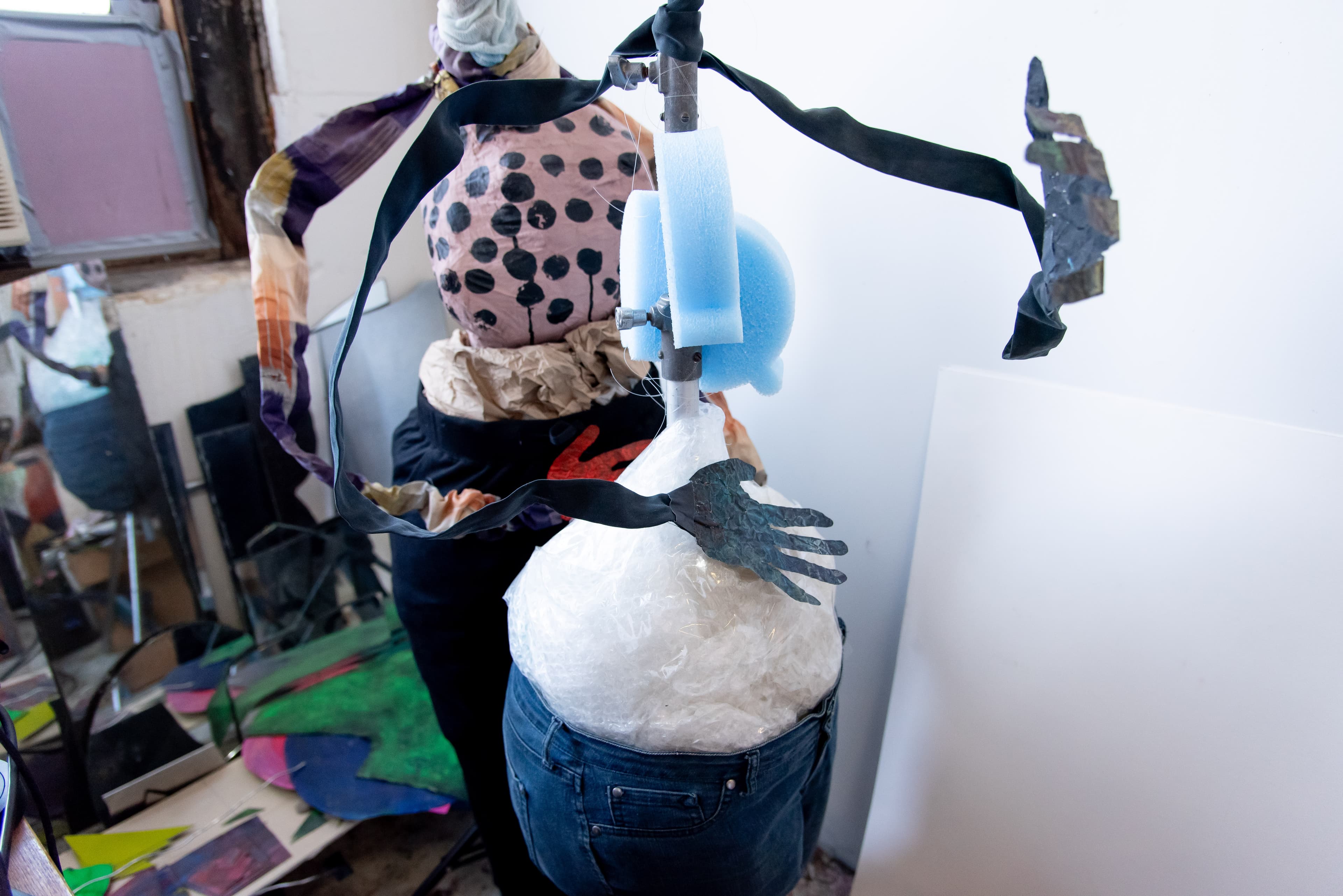
OPP: The presence of reflective materials, especially fragments of mirrors, is fairly consistent throughout your work. I see it emerge early on in your video performance pieces, and it seems to gradually become a more central element. Your presence in the work in the form of reflection evolves in a similar manner. What were the forces at play during this gradual evolution?
ST: When I was younger, it was about being an attractive woman and an artist. I felt there was a real trap in putting myself into my work, which is something you’re rewarded for but it also makes it difficult to do anything except for that. It can become so overwhelmingly part of the work.
Now I feel very different about it because I’m older, and no longer sexy in a traditional sense. The power of what I represent doesn’t overpower everything else that is happening, and it becomes more complex and interesting. It's really tricky and unfair, but you have to contend with it. We have to be aware of what the work does outside of us.
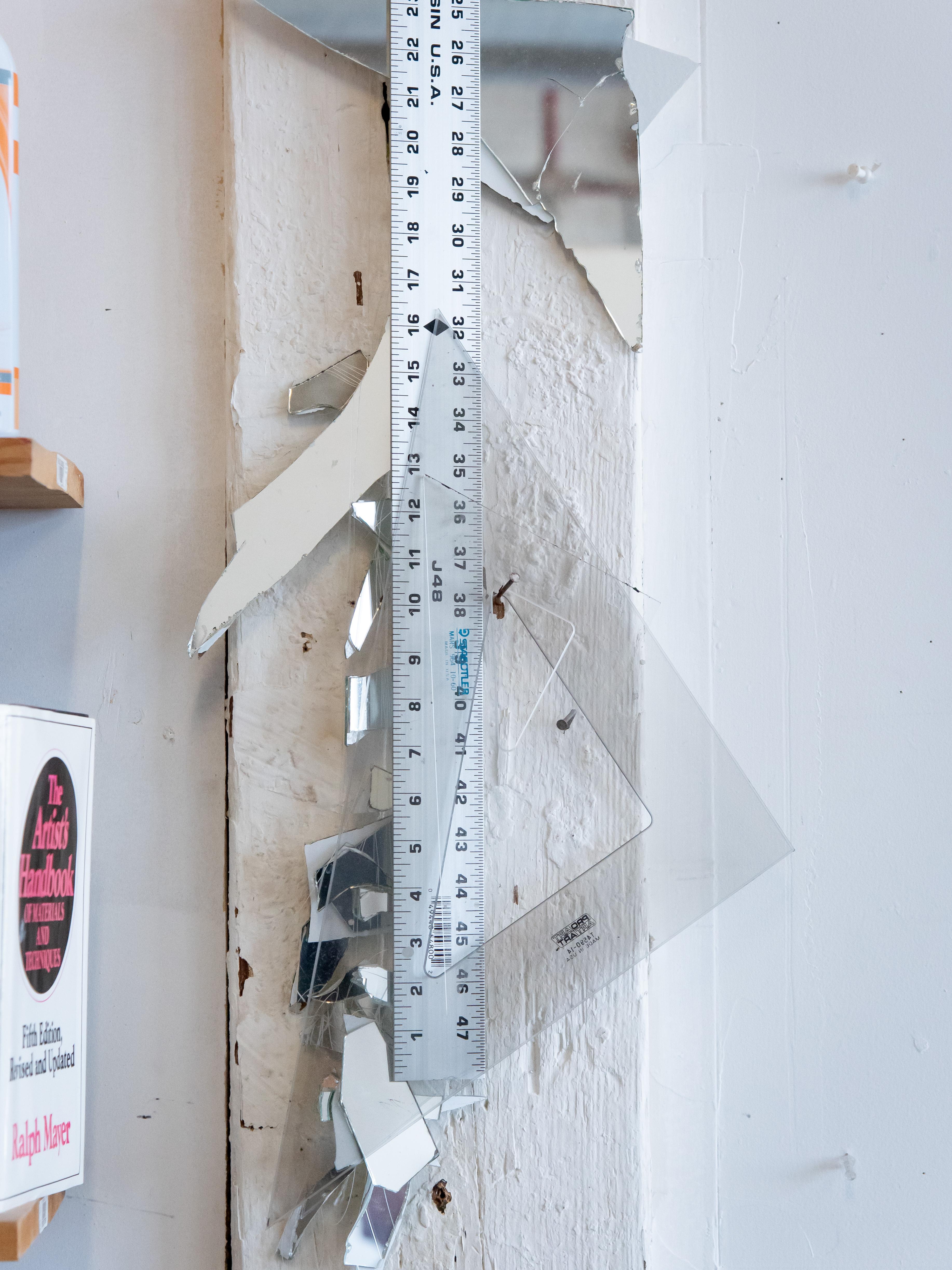
OPP: That makes me think of something you've written about camouflage.
“Camouflage, also known as cryptic coloration, is the method that allows an otherwise visible organism or object to remain indiscernible from the surrounding environment.”
I originally thought this was about seduction or entrapment, but it seems like it's more about avoiding detection.
ST: The piece Camouflage is made from broken mirrors that are dangling and rotating, and it becomes invisible within its environment. It's almost a digital smudge in the landscape, and the environment itself isn't totally understandable. The things that are most visible may also be the most invisible. Ultimately, it's about reflecting your environment.
There is also the fact that it's made with broken glass which is inherently dangerous, and the super heavy trope of a broken mirror. This was during a time when I was very interested in working with things that are already laden with meaning and making them do something completely different in a convincing way. I also really liked the idea of something that's super shiny and attractive, but you can’t get close to.
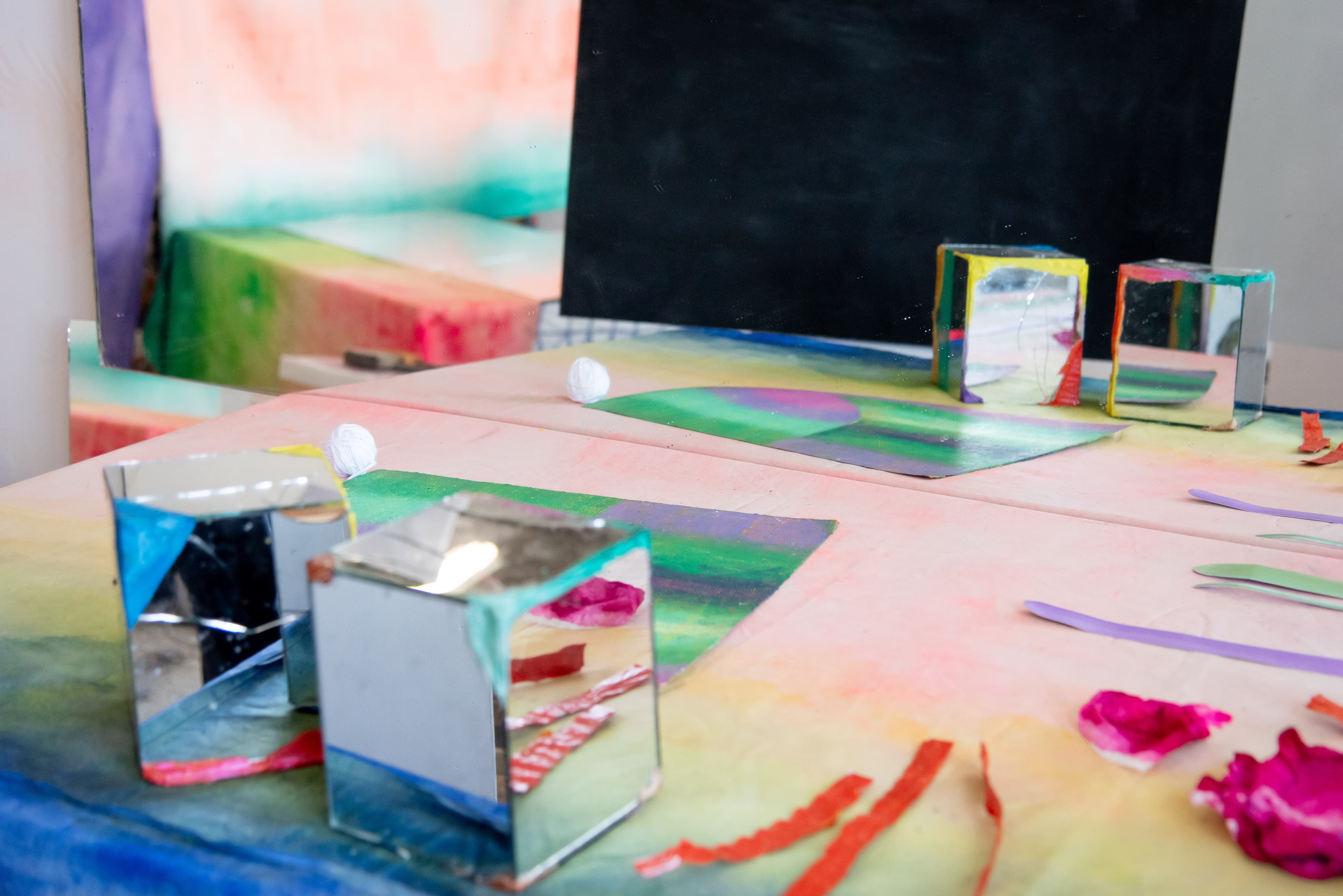
OPP: You write about the root of the word animation, anime, which means breathing life into something or giving it a soul. I also get fixated on words. Discovering the root or origin always reveals something beautiful or unexpected. I recently learned that the word chance comes from the Latin cadere which means to fall, which seems to fit so well with your animation work. There is this constant oscillation between the two-dimensional and three-dimensional. You're working with gravity, and that's so apparent in the way that these objects move. They're always tethered to the wall or to the floor, and yet they're sliding in between those two dimensions in such a powerful way.
ST: Stop motion in particular is a truly metaphysical activity. In a way I am the medium. I really believe this stuff is alive within the space of the screen, and that the screen is an actual space. It's animistic in the sense that I’m facilitating what they want to do or what they have the capacity to do. I can see these actors showing up, playing roles, and taking parts in these images, and I need to bring them to life.
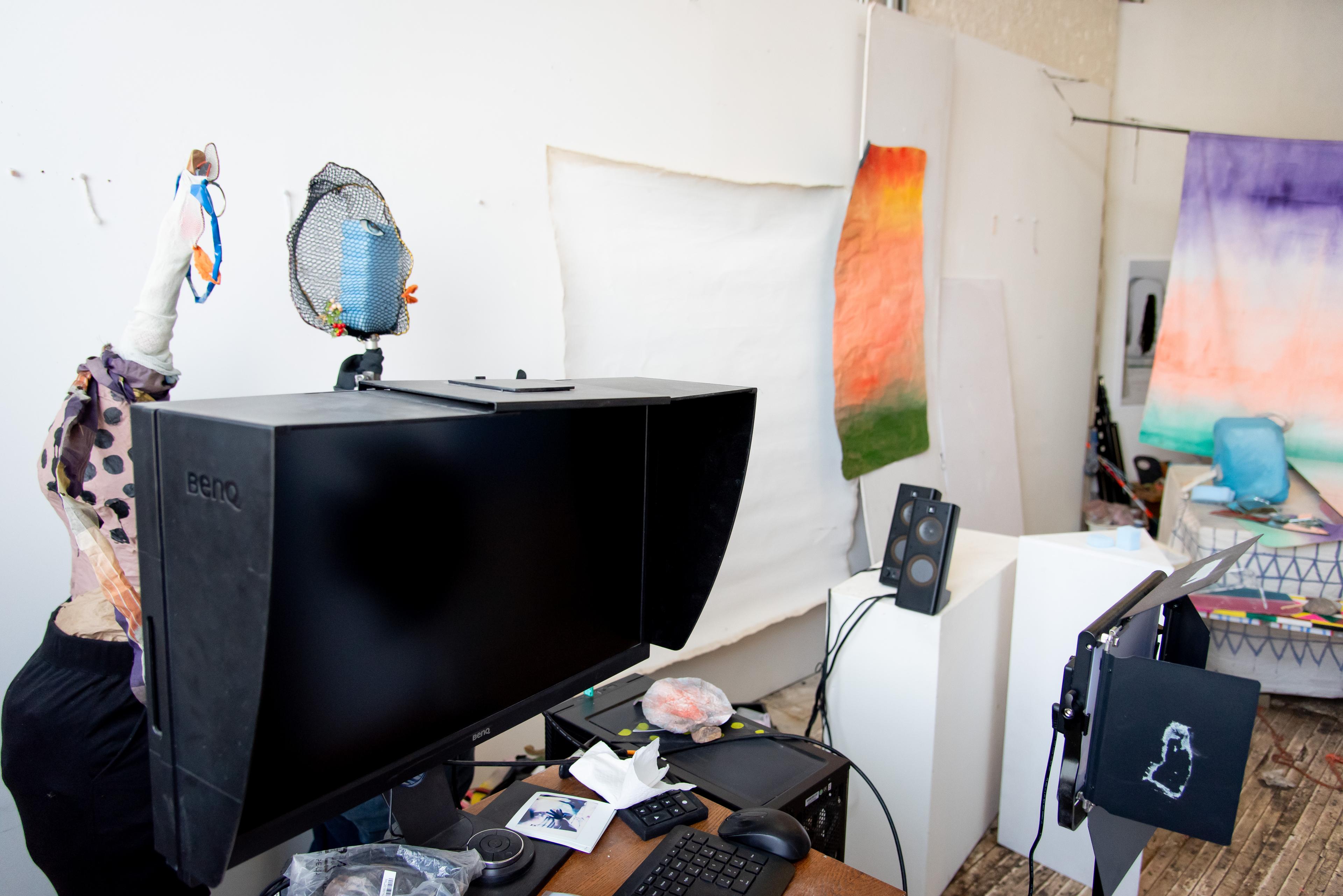
I’m working with a mirror and a lens, both of which flatten everything out. These are the dual two-dimensional aspects of the three-dimensional space and the objects that are being manipulated. This is where my special skill comes in, and it’s something I have always done since childhood. I can play around with depth of field and focus in my eyes, and flatten space visually. Ultimately, the animations express the way I view the world.
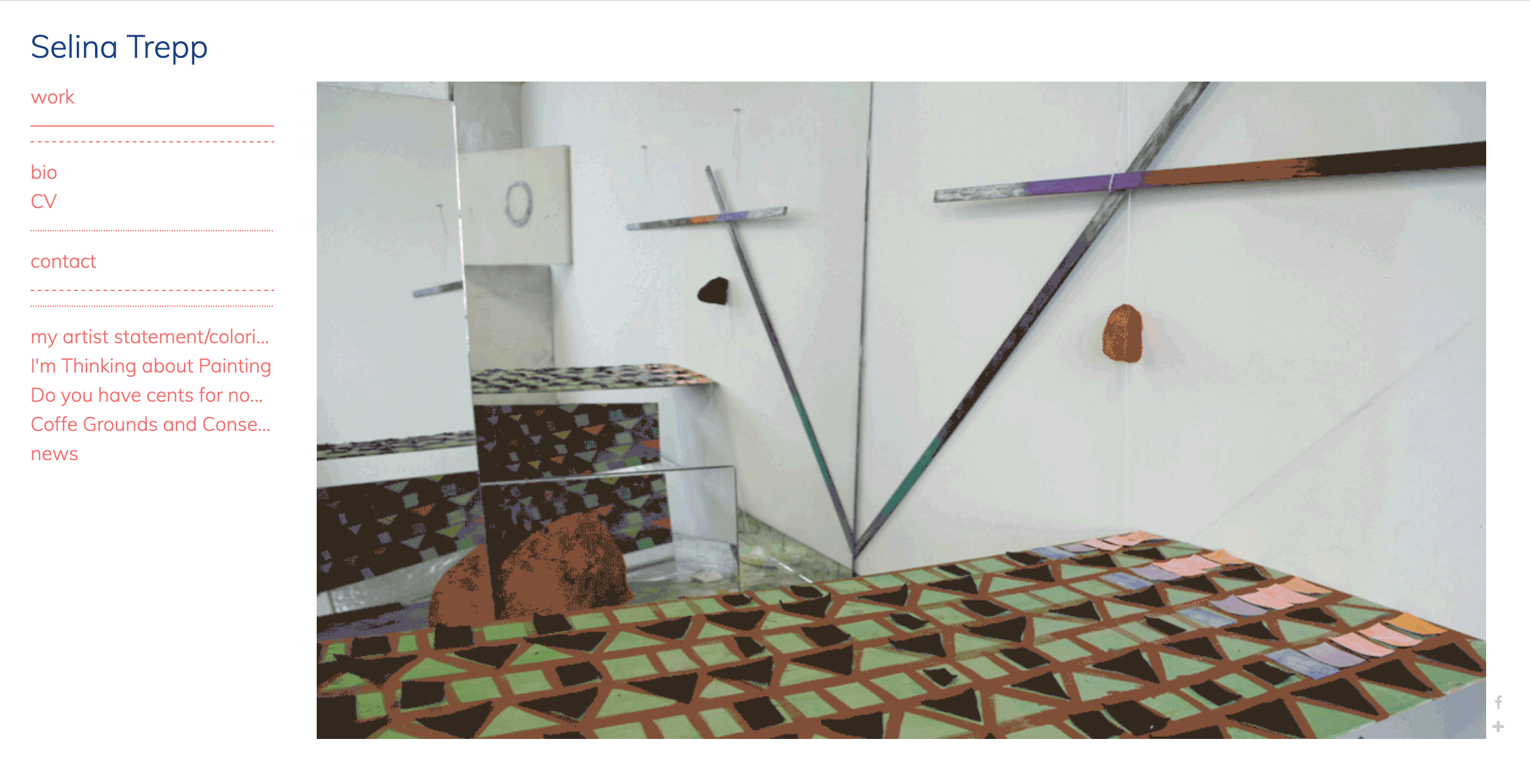
To see more of Selina's work, please visit www.selinatrepp.com.
Featured Artist Interviews are conducted by Chicago-based artist Lillian Heredia. When she’s not creating for OtherPeoplesPixels, Lillian makes work that grapples with past experiences with religion, sustenance farming, and motherhood through the lens of her background in biology. Her work has been shown at The Ukrainian Institute of Modern Art, SAIC Galleries, Woman Made Gallery, The Martin, Purple Window, SITE Galleries, and Circle Contemporary. She received a Bachelor of Science in Biology in 2011 and recently completed a Bachelor of Fine Arts at the School of the Art Institute of Chicago with an emphasis in sculpture. Lillian is a recipient of the Presidential Merit Scholarship and has been a finalist in the Pinnacle Awards and the Documentary Family Awards. Her work is currently featured on Comfort Station’s Artist to Watch series.