Angela Davis Fegan
January 21, 2025
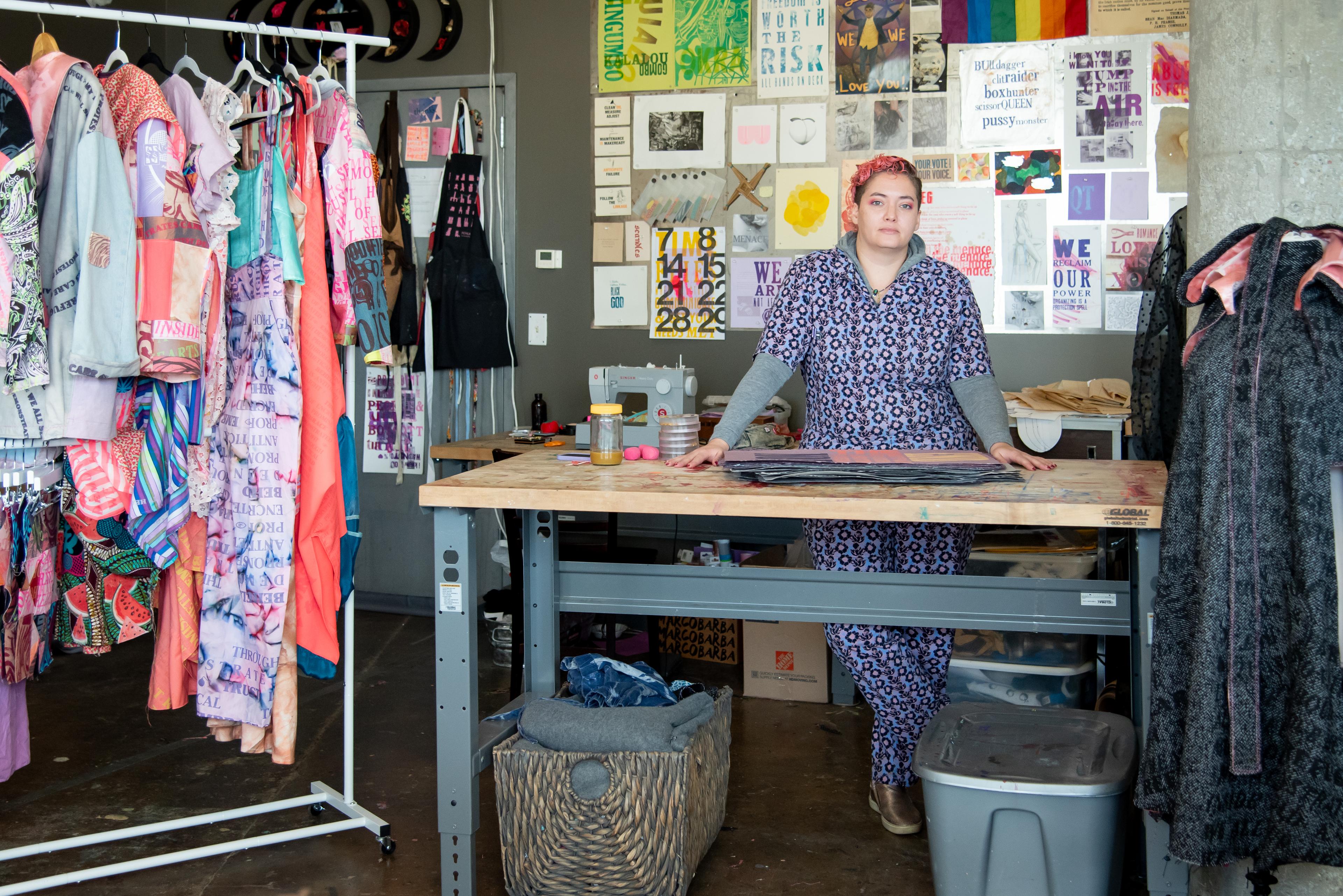
The art practice of ANGELA DAVIS FEGAN is a curious combination of opposites. Her public facing work is loud, provocative, and unapologetically political. Using a letterpress, Angela makes posters and other hand-printed works that are meant to circulate and incite action, gravitating from art’s standard place on the gallery wall into the hands of protestors in the street. She self-identifies as a public menace, and persistently calls on her audience to share in the fight against fascism and social injustice. Present in equal measure is a quiet commitment to the spiritual and ritualistic aspects of the everyday. Paper making, spell casting, sewing, and foraging happen slowly, the impulse of which arises from tender and private sources. The notion that art is no more than the primal yearning humans have for ‘making special’ lies at the crux of this more personal work. The urgency with which Angela tends to this imperative is present throughout her practice, from the crafting of protection spells for her beloveds to the rousing text pressed into the surface of a poster.
Angela Davis Fegan is a native of Chicago’s South Side. She received her BFA in Fine Arts from New York’s Parsons School of Design and her MFA in Interdisciplinary Book and Paper Arts from Columbia College Chicago. Angela has mounted shows at Chicago Artists’ Coalition, the DePaul Art Museum, The Center for Book Arts (NY), the University of Chicago’s Arts Incubator and Center for the Study of Gender & Sexuality, the Hyde Park Art Center, SAIC’s Sullivan Galleries, Columbia’s Glass Curtain Gallery, SPACES (OH) and Co-Prosperity. She has held residencies at Connecticut College, the Hambidge Center (GA), Revolve (NC), Project Row Houses (TX) and Women’s Studio Workshop (NY). Her work has been selected for book covers including The Truth About Dolls by Jamila Woods, Secondhand by Maya Marshall, All Blue So Late by Laura Swearingen-Steadwell and Super Sad Black Girl by Diamond Sharp. Her lavender menace poster project has been written up by The Offing (LA Review of Books), Hyperallergic, Chicago Magazine, Go Magazine, Pop Sugar, the Chicago Reader, and Newcity.
OtherPeoplesPixels: Letterpress printing shows up frequently in your work, bringing to mind the complicated history of this tool. There is the role of the letter press in colonization and oppression generally, but it also holds a pivotal place within revolutionary movements. How do you contend with these dueling legacies?
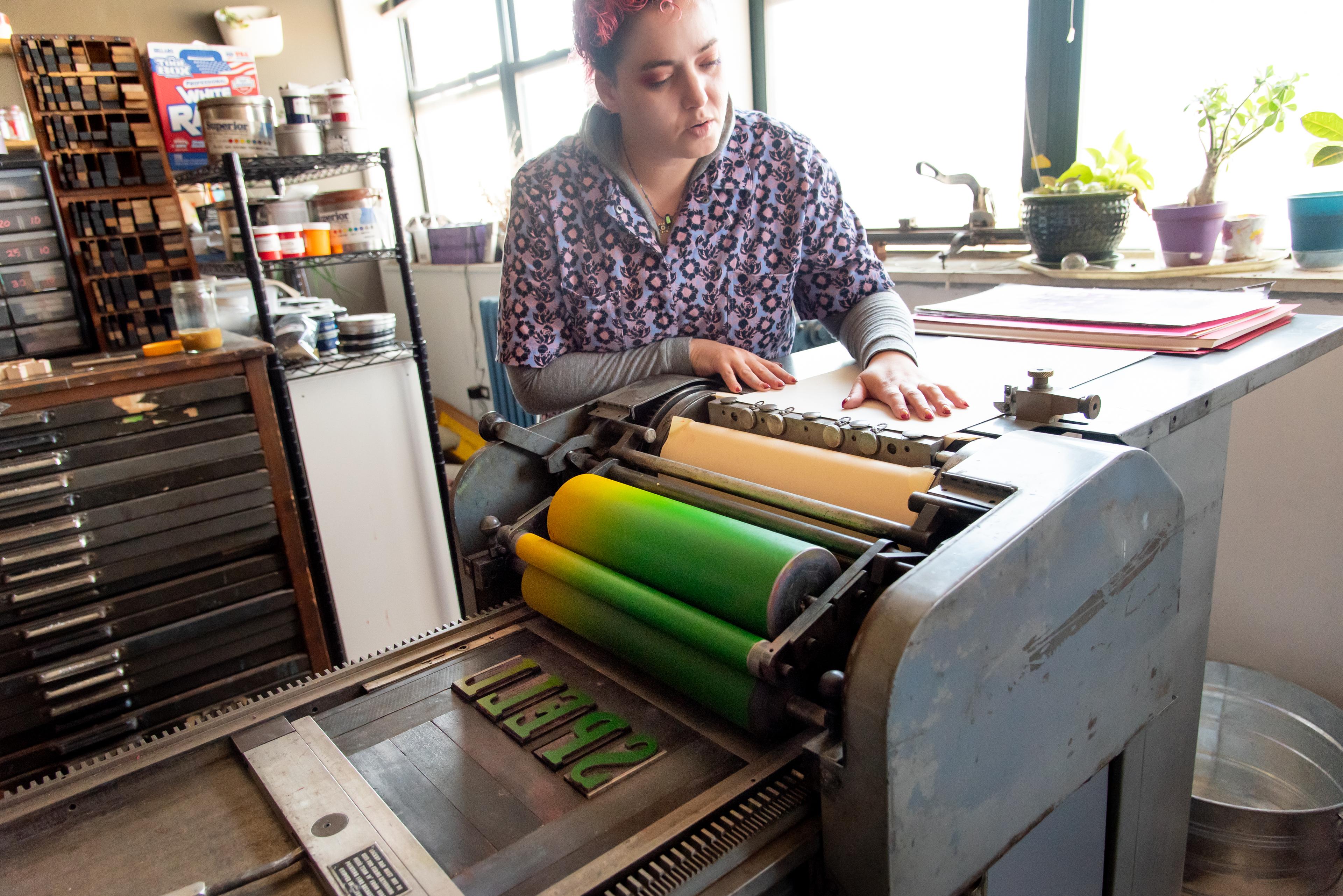
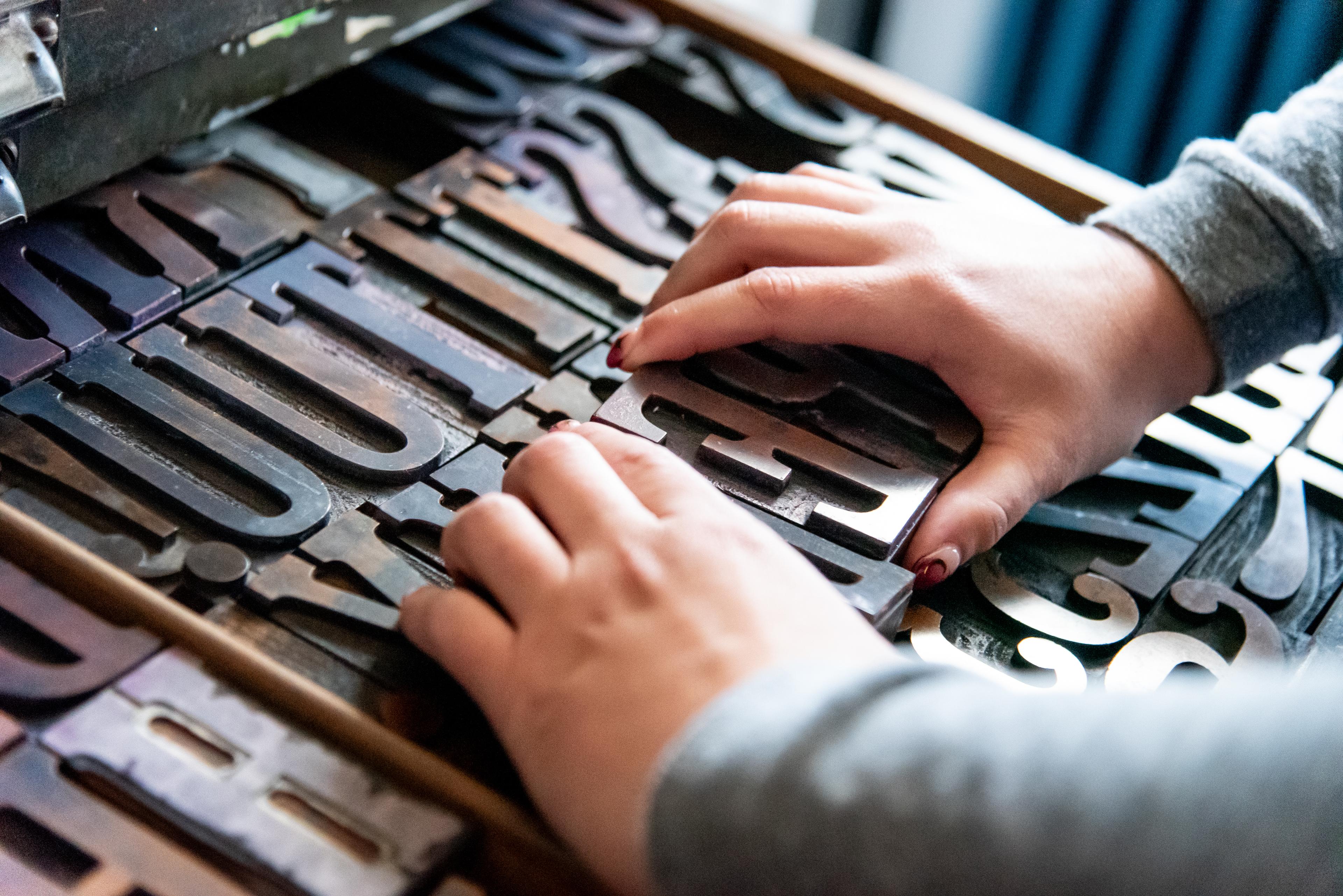
Angela Davis Fegan: All methods of production have fraught histories, and I don't have to own all the negative things about the letterpress. It is a tool that I have access to and have learned to manipulate well, but it’s also traditionally artists' tendency to adopt outmoded technologies and refurbish them for a different use. I have this print specimen from the National Print Museum in Dublin in which the Irish proclaim their intent to emancipate themselves from the British. They didn't have enough type to print it continuously, so you can see the break and the rearranging of the words to finish it. This reminds me that it was once a tool of urgency, even though it might be a slow method for me to do things now.
OPP: You speak of your print work as distributable, democratic multiples. How do printed texts–posters, pamphlets, books–still have revolutionary potential in an overwhelmingly digital present?
ADF: Making things by hand or distributing them by hand builds an in-person relationship, a real life social network instead of like the conceptual one that's online and vulnerable to editing. You can only consume it as fast as you can turn the page or look at it with your hands, which is much slower than anything you encounter through a screen. It also travels differently. I can install work in a gallery space, but because I live in segregated Chicago, the audience is limited by what neighborhood I show my artwork in. In contrast, that same information or visual language in an ephemeral print piece can travel unencumbered to all these different places. I gave posters to people during Dykemarch in 2014 who then brought them back out into the street for the Women's March in 2017. I see them cycle through their potential–art display in a white cube, gallery take away, bar bathroom, someone’s home, or out on the street.
OPP: lavender menace is an ongoing project you've been working on for more than a decade. The title takes its name from a group of lesbian radical feminists who challenged their alienation from the feminist movement. How does the reclamation of a once negative term empower this work specifically, and marginalized groups in general?
ADF: 'Lavender Menace' was actually an insult coined by Betty Friedan, but I don't necessarily think about it as being negative. It opens up a conversation with history, but it also functions as a title umbrella to hold my disinterest in the idea of gay marriage as a liberation tactic. I believe marriage is an assimilation tactic, a way to get new people to buy into an institution that would otherwise have long died out. Even straight people have found other methods besides marriage to partner and sustain community. I knew I couldn't be the only person who felt this way. I thought if I wrote with this title instead of signing my name, people who agreed with me would seek it out and participate. I did that to draw people to me, but also as an informal litmus test of where the politic exists moment to moment.
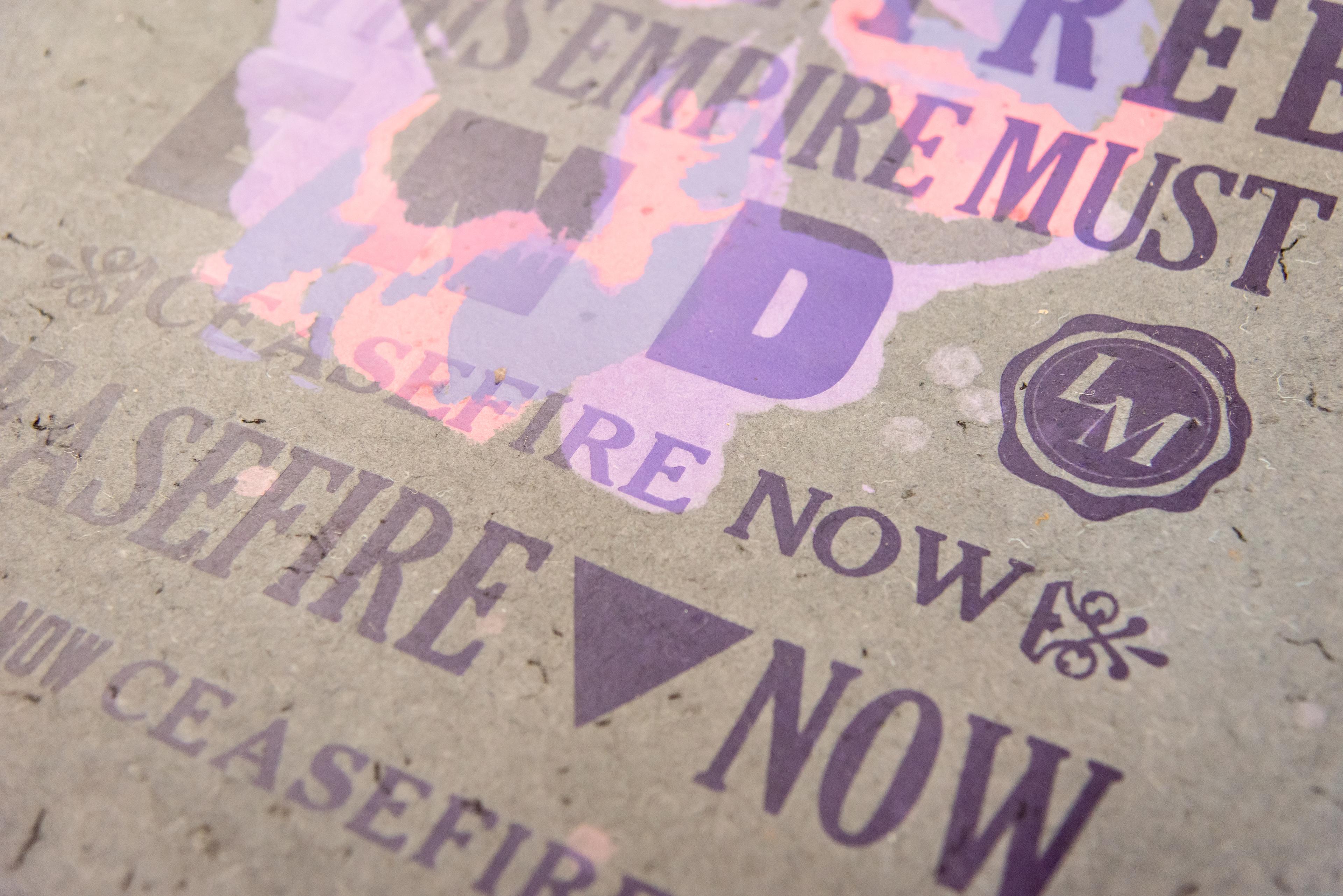
OPP: How are you employing color theory and text hierarchy within your work? I'm thinking specifically about legibility and how some works confront with chaos and confusion, but in a way that subverts an immediate dismissal. I'm compelled to spend more time with them.
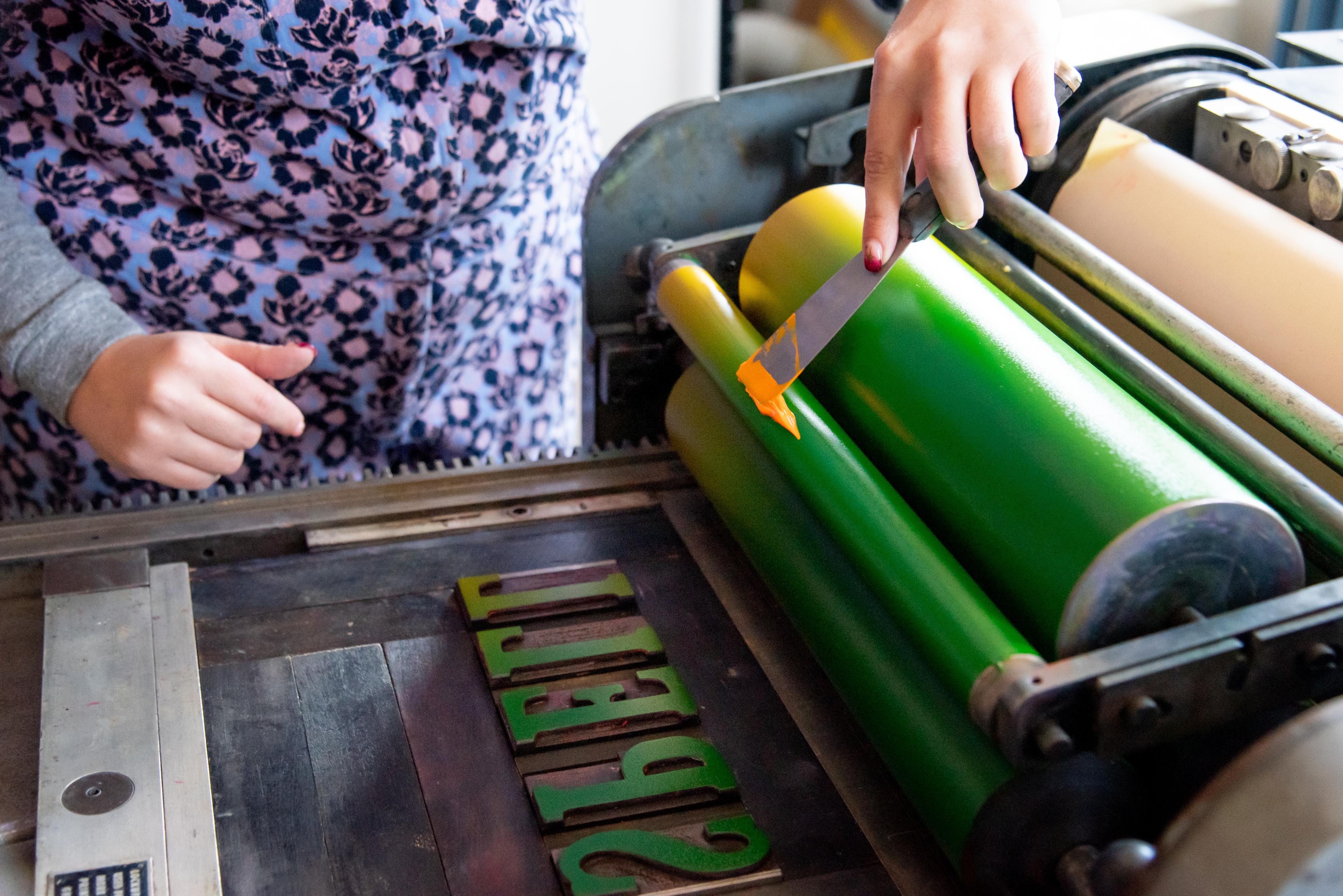
ADF: The color theory employed is usually triads or analogous hues to have all aspects and materials work in concert. Color to me is vibration. There’s something about tone on tone or harmony that I feel helps unify the message and also ties it back to a particular palette. I’m at the point where my wardrobe and my art and my personal effects are in one of three color schemes.
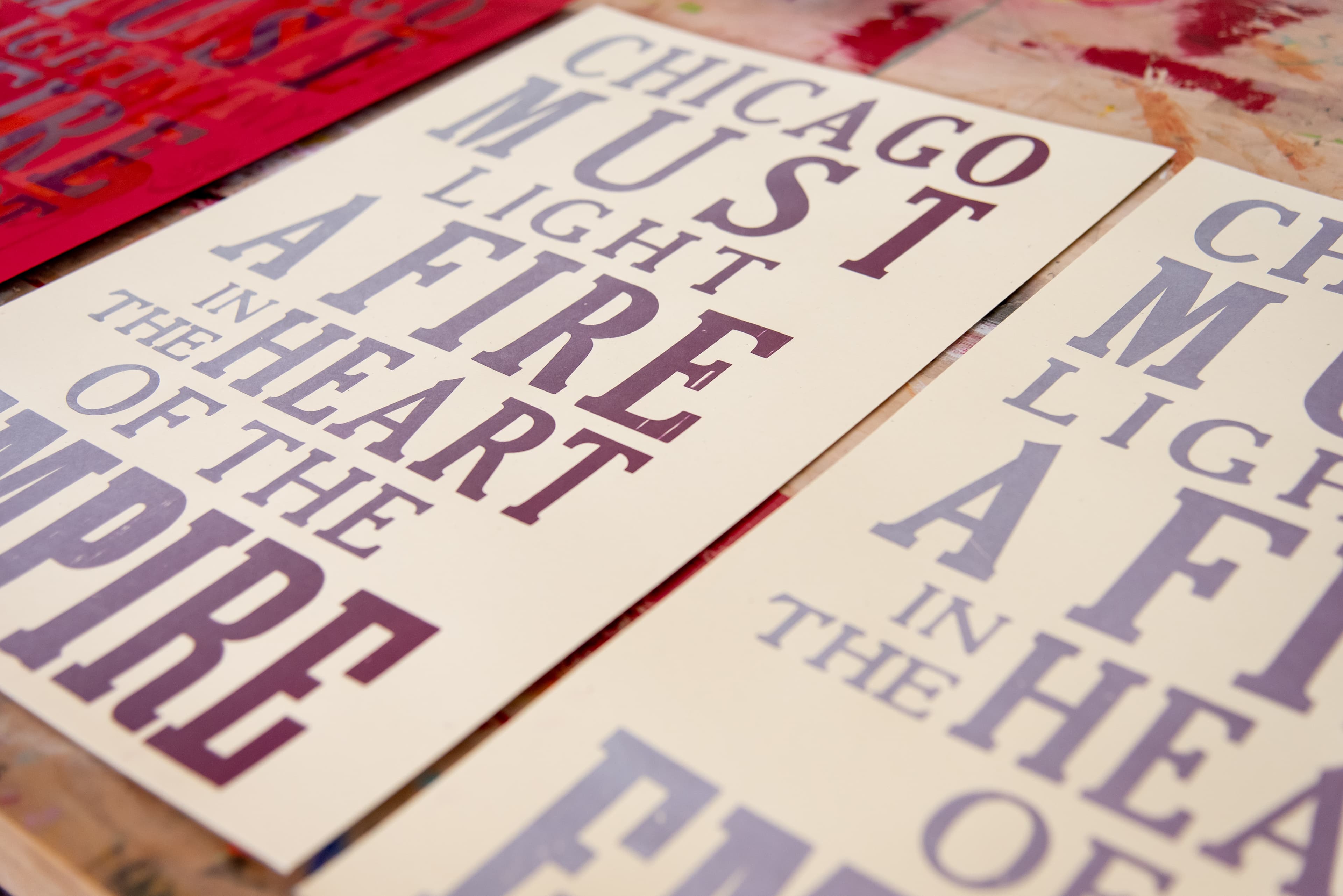
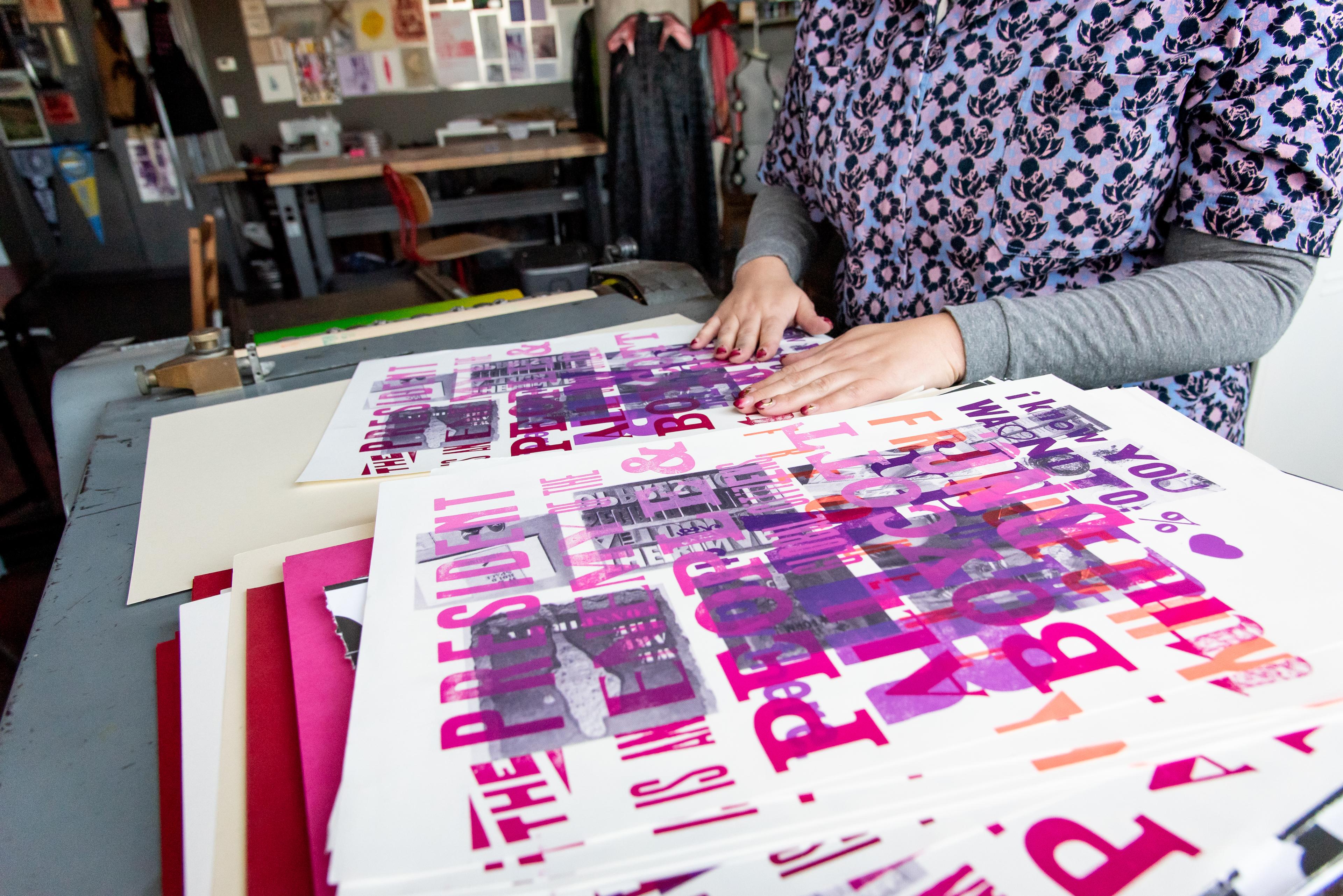
Text hierarchy is part of the visual math of doing any lockup for letterpress printing. I cannibalize my work, printing on the same surface over and over again. I think that leads to the chaos that you're talking about, which I like to call a hypertext. If you think of it as a spell or something similarly imbued with meaning, you can continue to layer onto that. There is a performative aspect–the history of the entire run of the project on one surface instead of it being a clean read, like an advertisement or commercial culture type object.
When I first started, I would print clean reading versions of the posters. I’d make twenty-five at a time and distribute them. They were taken directly from the gallery or passed out at events, and anything left over would be reintegrated into the cycle. There was a show at the Sullivan Galleries for The Illinois Humanities Council in 2019 in which I was asked to show what I had remaining of my archive in small takeaway form. Everything was printed with a consistent phrase related to the theme of the show, but each looked completely different and had a unique history. I did that again this year for my solo show with prints I was done with or didn't like. They were torn down to the same size and then given the unifying statement “emotionally invest in this moment.”
OPP: There is a through line in your work of cycles of breakdown and reconstruction. This is present in the surfaces of your paintings, but also in some of the messaging of your posters. Piercing, cutting, tearing– the remnants of which are digested or reincorporated to make something new. Can you talk about motivations behind this, personal or political?
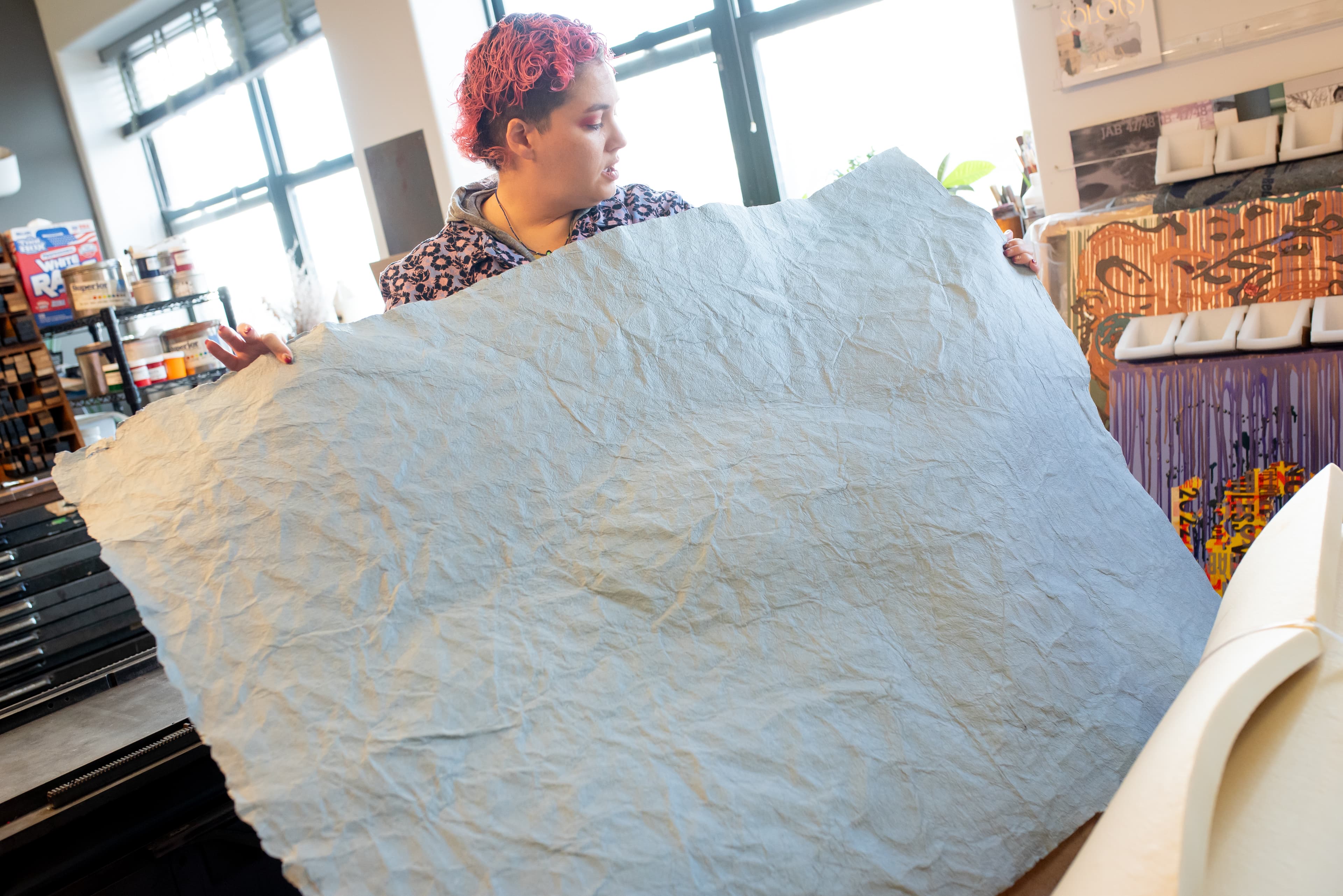
ADF: Some of those terms are just a tongue-in-cheek way of pointing back to book arts or turning the viewer towards thinking about process. Art is not all that different from other ritual practices like witchcraft or alchemy. I think about this especially when I’m making paper out of people's garments they used to wear on their body. I've made a lot of paper out of my father's denim. He was an English teacher for thirty-five years in Chicago Public Schools. It’s very gratifying for me to give out these text-based objects that hold pieces of him. In a way, I keep putting him back out into the world.
OPP: I'm also thinking about those words in terms of some of the institutions that you're challenging. Inherent in successful political movements are strategies for usurping pinnacles of power. It feels adjacent to operations of dismantling before something can be remade.
ADF: I had a show recently titled Deep Needle, which is something my ex-girlfriend called me. It means to be very intense and piercing which is uncomfortable for a lot of people. I use it as a social defense mechanism, but we also need people who are willing to be a menace and disrupt norms.
I’m also drawn to antiquated objects that remain universally relevant despite technological advancement. We use needles for all sorts of things from healthcare to tattooing. Books fall into this category as well. No matter how advanced your cell phone is, there are certain things a book can do that your phone can’t. A book will survive water better than your phone will, especially if it is handmade paper which is incredibly strong. This is why I’ve been able to put my paper works in places like bar bathrooms. Posters I glued to the wall in Cole's Bar in 2016 in the single stall accessible bathroom have held up! Cole’s is a dive bar on Milwaukee Avenue in Chicago, and admittedly a lot of gross things happen there, so the posters have been exposed to harsh cleaning products like bleach. There are areas where the bleach has leached the indigo out of the paper, but it hasn’t affected the rubber based ink. The message is still clear and legible, so it endures.
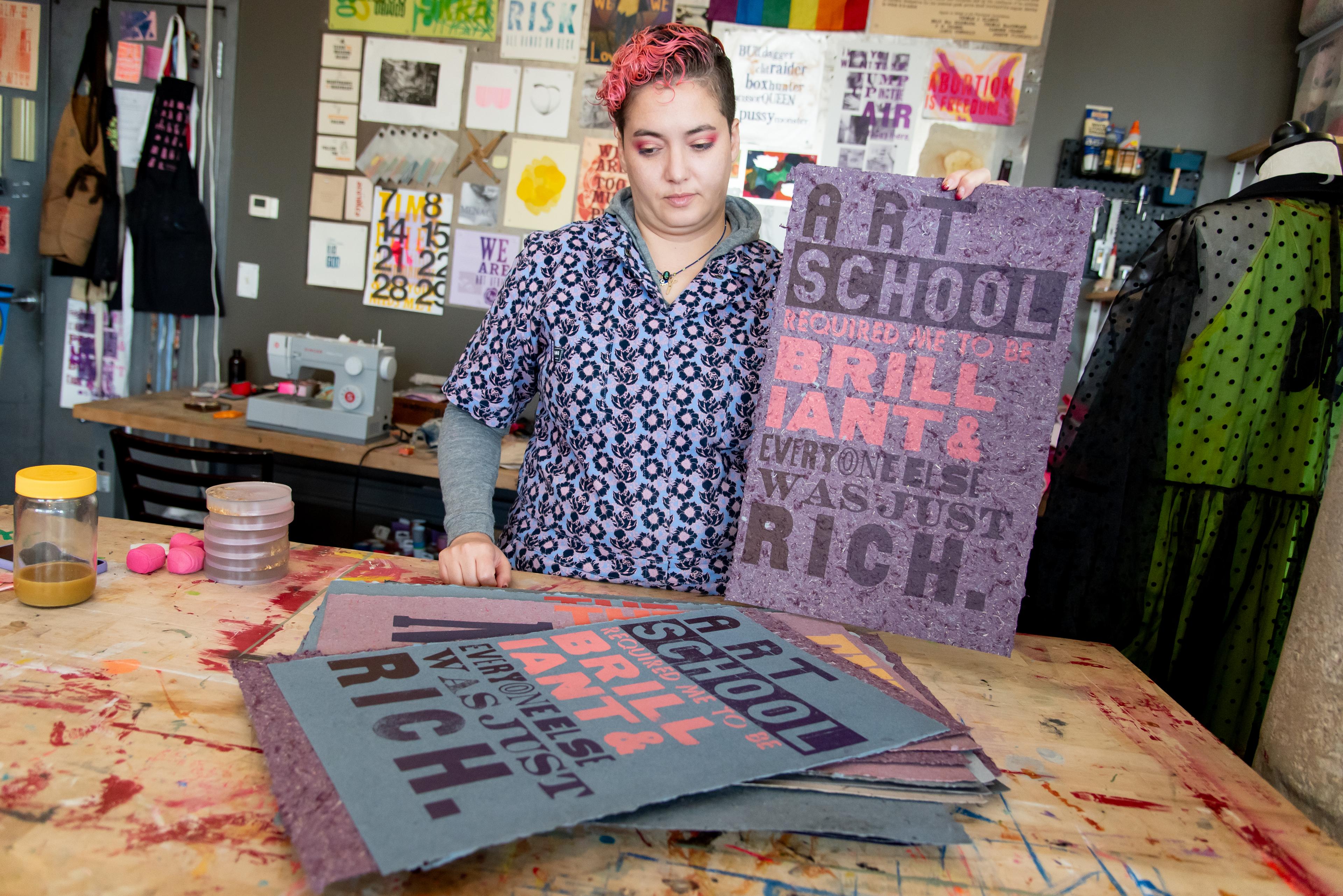
OPP: bathrooms is another ongoing project in which your text pieces are written, stenciled, or otherwise attached to surfaces of bathrooms and dive bars. What is it about this site specifically that draws you?
ADF: One aspect revolves around everybody's agreement in the gender binary, especially in spaces in which enforcement is absurd. We see a lot more gender-neutral bathrooms in public spaces today, but at the time that I started doing this project in 2013, they were scarce. These works became part of an ongoing shift. I’m also interested in how this site functions as a public intimate space. The idea that I've made a gallery out of a room in which you're not wearing pants is a win for me. You’re vulnerable and extremely susceptible to messaging, which is why they put targeted ads in bathrooms. If it's an ideal spot for commercial advertising, it's also someplace that I should interrupt.
OPP: I was also thinking of these site specific works as a way of understanding the presence of menstrual blood in your paintings. Do you think of this material as a way of bringing to the forefront something traditionally cloistered away behind veils of shame?
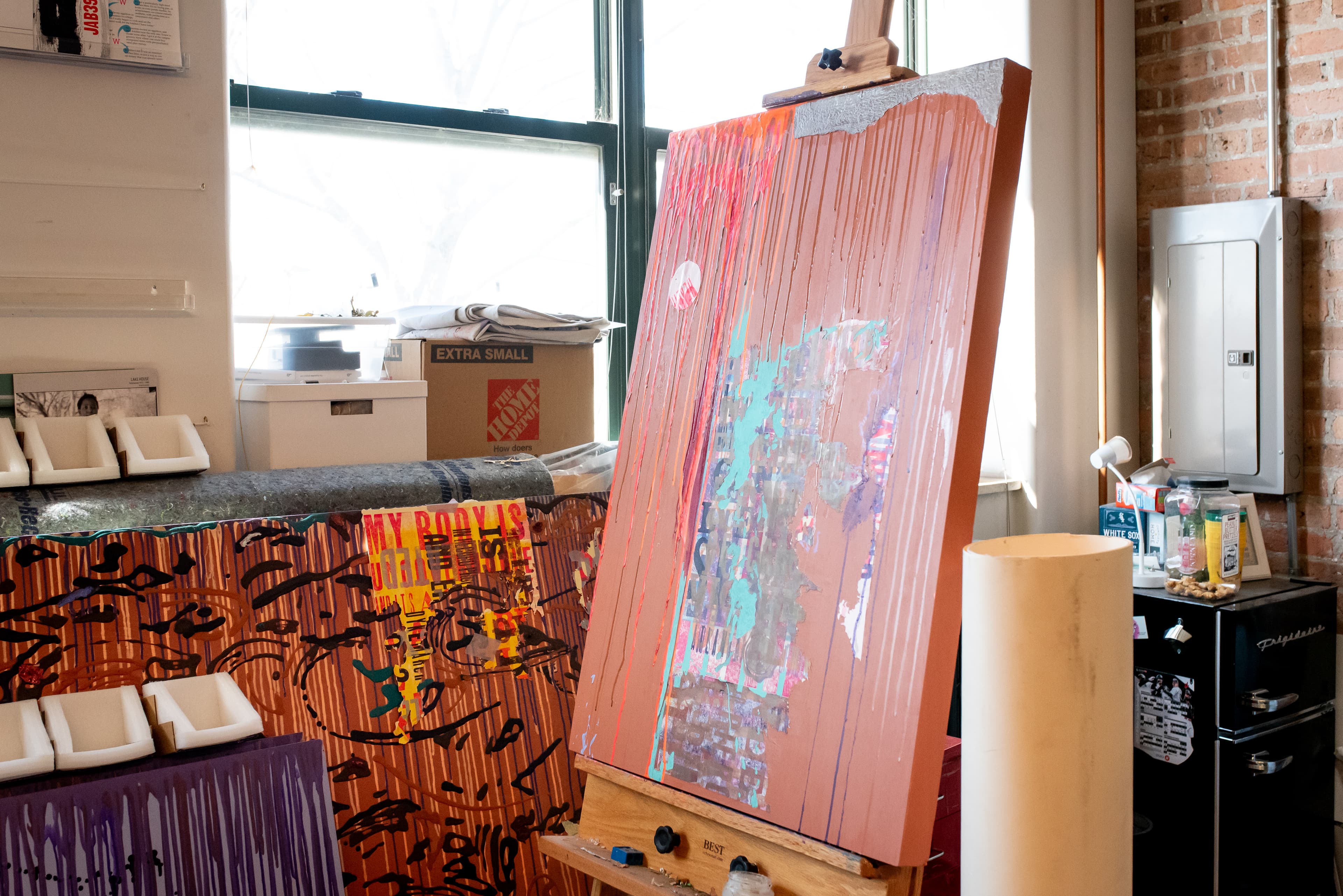
ADF: There is a lot of blood within my work, not just paintings. For example, I use it as a blood signature on a lot of the posters. On the one hand, it’s a free art material that I can independently harvest and process, but it also makes the process feel more like spell casting. I think it’s more about using things that feel related to the body and that I’m aesthetically drawn to. I use a lot of blood, denim, and roses which are all very different, but they exist in this perfect triad of fragility that communicates the blurry boundaries between life and death. Blood is perhaps most closely attributed to the influence of Ana Mendieta in my work. Roses are the symbols of the Socialist Party, and they are also used throughout my favorite Mexican Catholicism iconography. Material choice is both practical and conceptual, but it also relates to the spiritual practice of making which for me is synonymous with art making. Making special is different in every religion, community, or human tradition. I'm not doing anything new. It's just a remix of the same ingredients. It's a ritual, it's a practice, and that could be a religion or really anything.
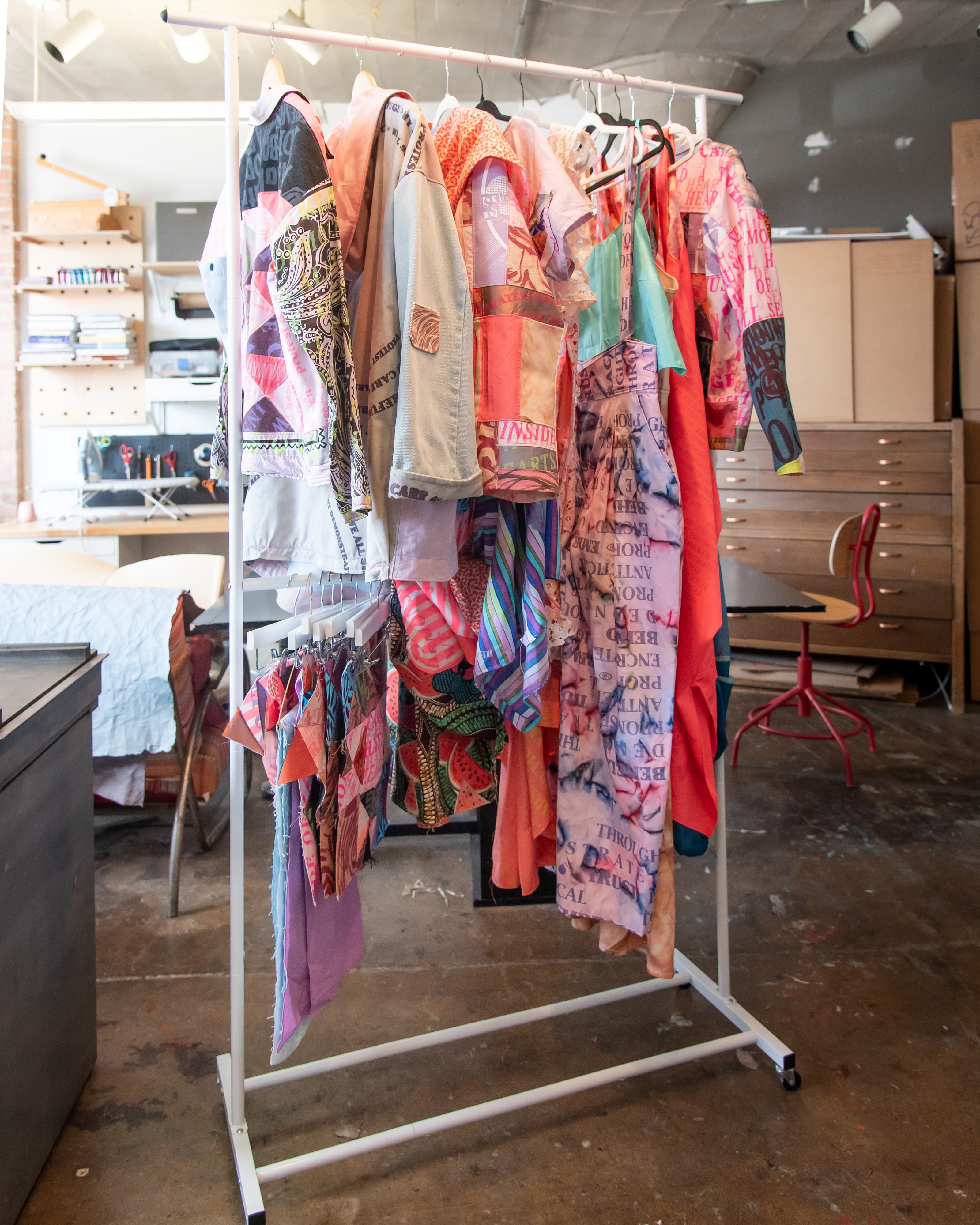
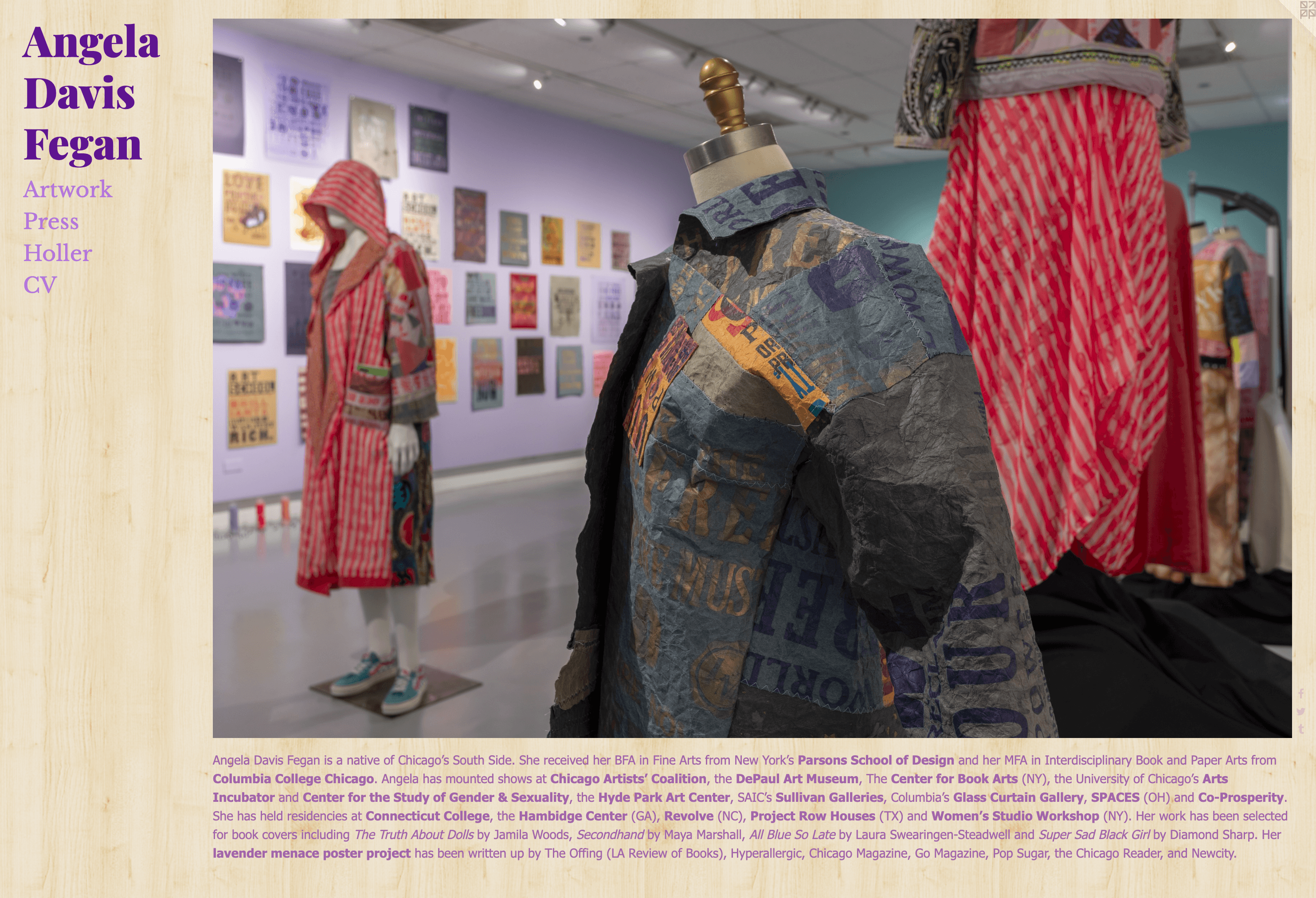
OPP: You recently had a solo show at Northeastern Illinois University Fine Art Gallery in which garments were present alongside printed and painted works. Is this a fresh foray into wearables? And what happens conceptually when the text is transferred to a fabric and worn?
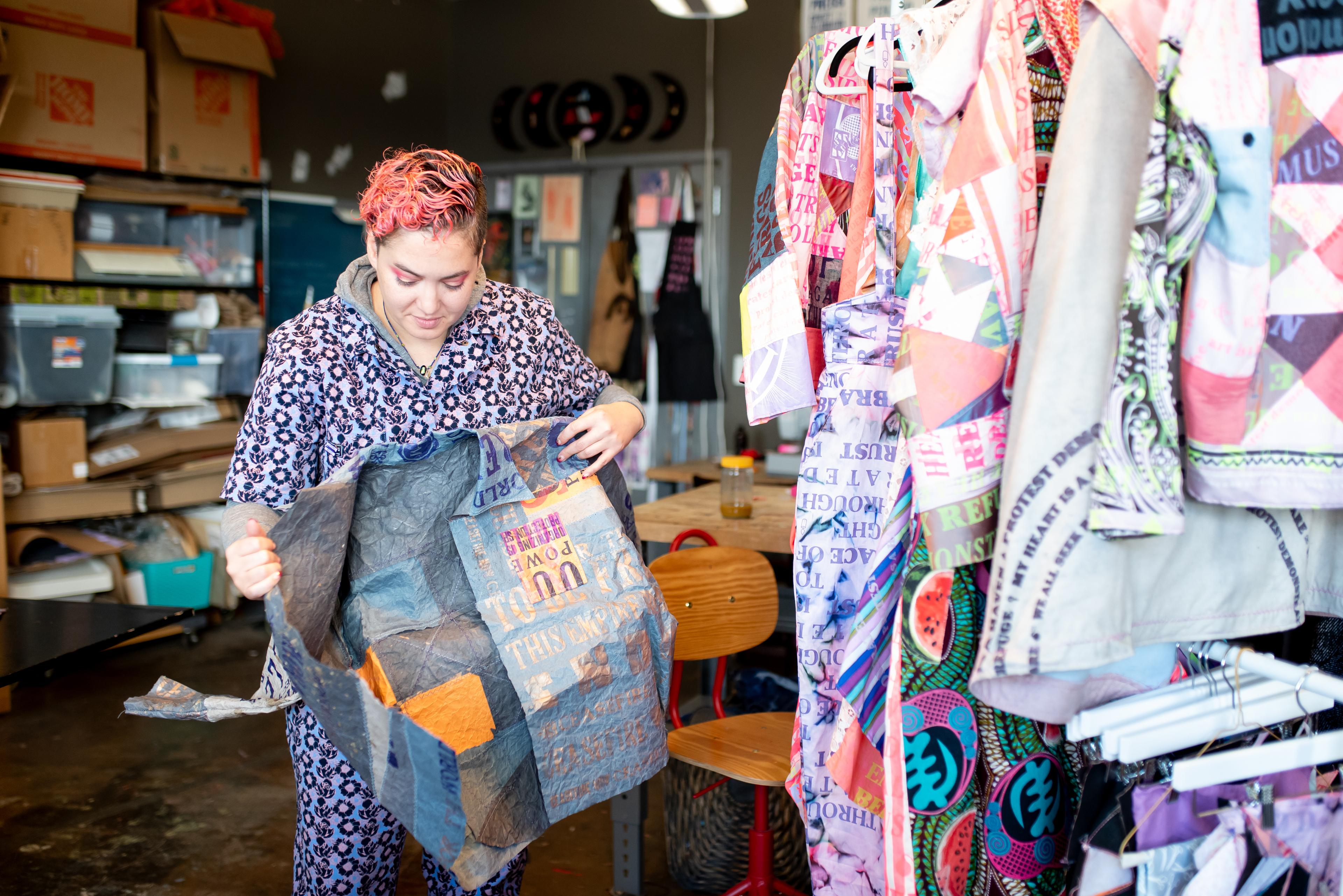
ADF: For me, the show was more full circle. I've always been interested in the body, and sometimes a piece of fabric or a garment can do something the poster can’t. Posters go out into the world and don't come back, and everybody wants my artwork to do the heavy lifting. The posters themselves can’t work against fascism. Their power is in their ability to inspire action.
When the genocide started being live streamed on my phone after October 7, 2023, I didn't feel like the posters themselves would be a solution, and I was experiencing a huge shift in my public life. Sewing is a quiet, meditative, private practice and I was yearning to make something that could protect my beloved. I began devising a protection spell by soliciting the three top Aquarius in my phone–the poet, the DJ, and my art wife–for a word that meant safety or security to them. I wrote language using those three words as the point of emphasis which became the first protection spell.
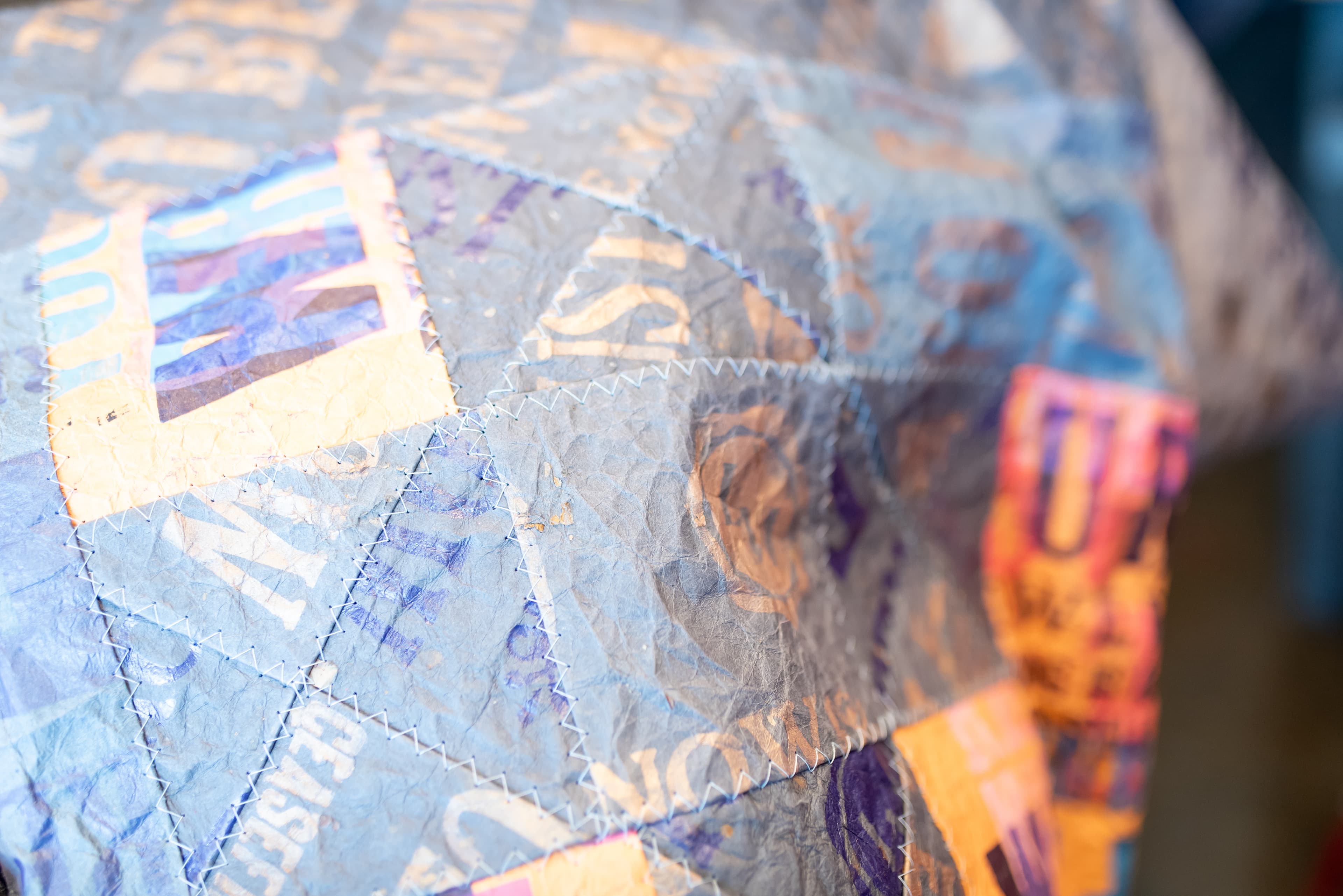
I most enjoyed the process of putting people I care about in the clothes to photograph them as a way of promoting the show. I haven’t decided where they live in the world yet, because they aren’t intended to be mass produced or become “fashion”. I could see them as a street team uniform, similar to the letterpress printed jumpsuits I made for my MFA thesis for those helping me pass out objects at Dykemarch. The project felt more cohesive, but it always circles back to protecting the body and being whatever you want underneath it.
To see more of Angela’s work, please visit www.angeladavisfegan.com
Featured Artist Interviews are conducted by Chicago-based artist Lillian Heredia. When she’s not creating for OtherPeoplesPixels, Lillian makes work that grapples with past experiences with religion, sustenance farming, and motherhood through the lens of her background in biology. Her work has been shown at The Ukrainian Institute of Modern Art, Lillstreet Art Center, SAIC Galleries, Woman Made Gallery, The Martin, Purple Window, SITE Galleries, and Circle Contemporary. She received a Bachelor of Science in Biology in 2011 and recently completed a Bachelor of Fine Arts at the School of the Art Institute of Chicago with an emphasis in sculpture. Lillian is a recipient of the Presidential Merit Scholarship and has been a finalist in the Pinnacle Awards and the Documentary Family Awards. Her work is currently featured on Comfort Station’s Artist to Watch series, and she is an artist in residence with 3Arts/Bodies of Work.