Rebecca Griffith
March 4, 2025
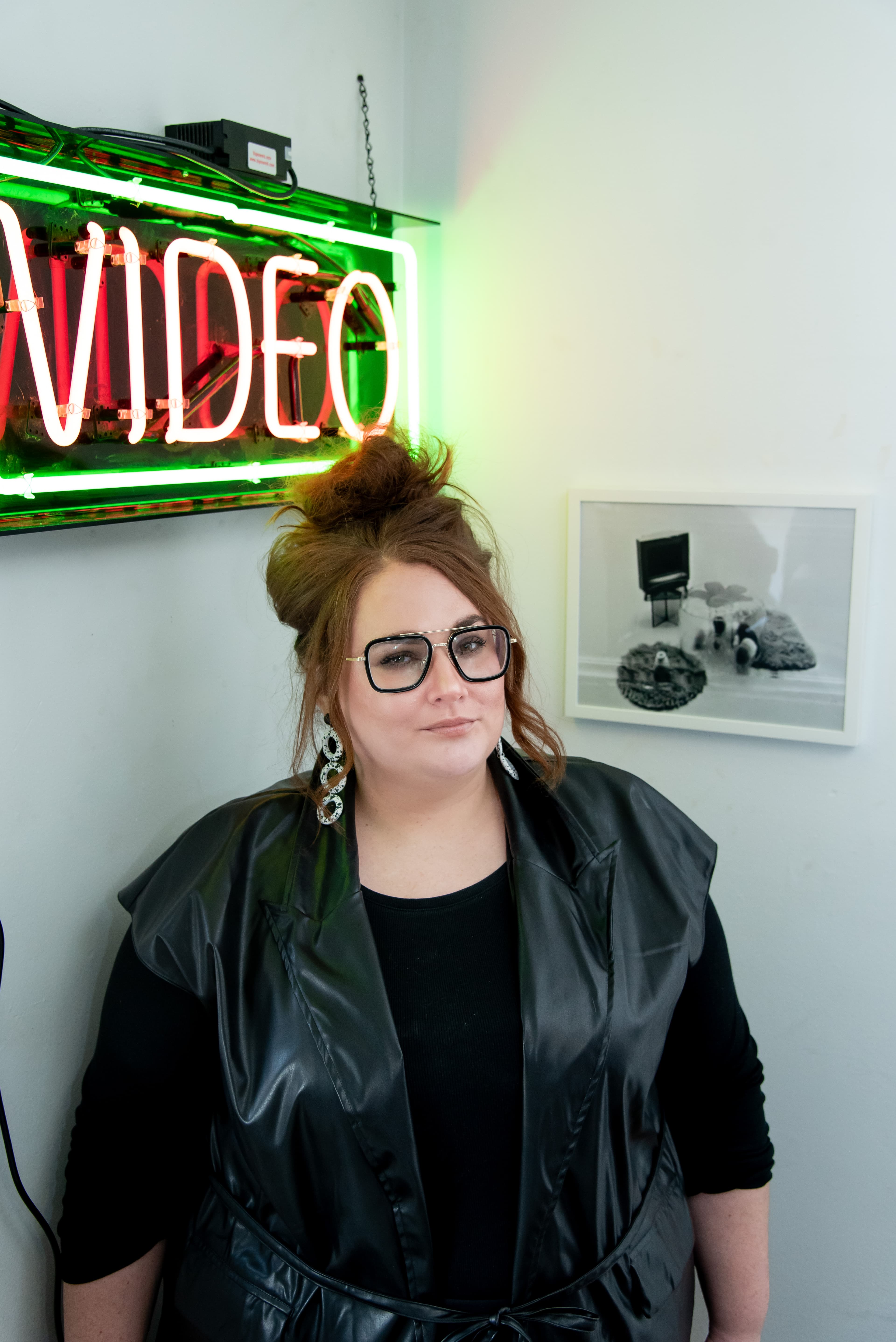
Chicago-based artist REBECCA GRIFFITH makes work out of her home, a circumstance that so often amplifies the experience of knowing another. Between the domestic realm and the studio space, a conversation has already begun. Rebecca’s living space is a curiosity cabinet and a feast for the eyes. Chimerical combinations of objects pull upon the fingertips, something natural and raw posed next to impossibly shiny plastic. Paintings, photographs, and sculptures made by colleagues, friends, and those she admires adorn the walls. Rebecca takes her time making introductions. Background is important, as are the stories we accumulate over time. Rebecca has a keen understanding of place within her art ecosystem, creation and circulation in tandem with generosity and care. Even before the conversation pivots towards her own art practice, a creative landscape is taking shape—a reverence for the everyday material world, a celebration of the superficial, the obsolete enshrined.
Rebecca Griffith is an interdisciplinary artist, educator, and manager of Purple Window Gallery. Her curatorial practice is centered around community outreach and public initiatives that democratize the artworld and create a sense of belonging. Griffith spearheaded the mail art initiative Hello USPS which connected over sixty participants across the United States during the 2020 lockdown. Griffith's curation style is a generative practice, one that facilitates interactions of co-creation through participant interplay. She has curated exhibitions at Purple Window Gallery, Northern Illinois University, The Record Department, and BackSpace Gallery.
Griffith has exhibited at the University of Oople (Poland), Unpacked Mobile Gallery (Chicago), Women Made Gallery (Chicago), Heaven Gallery (Chicago), Terrain Exhibitions (Illinois), and Ann Arbor Art Center (Michigan) among other midwest galleries and cultural institutions. Griffith was awarded first place in the emerging artist exhibition at Cleve Carney Art Gallery in 2018. She was the 2018 curator for Northern Illinois University's President's Office. Under her leadership as President of the Graduate Arts Association at Northern Illinois University (2016 - 2018), Griffith helped fund a week-long trip to New York City that fostered community among graduate members. Griffith earned her B.S.Ed. from Northern Illinois University in 2013 and her M.F.A. from Northern Illinois University in 2018. Griffith currently works in community outreach and engagement at University of Illinois.
OtherPeoplesPixels: Much of your work involves movies, specifically VHS tapes as both a physical material and the cultural content embedded within. Do you feel you've inherited your film palette from your mother? Some of your references are based in late 21st century pop culture, but other titles originate from a much earlier era, such as Whatever Happened to Baby Jane?. There's something multi-generational in your archive you're drawing from. It reminds me of some of the films my mother passed down to me from her mother, and the experience of watching them as a way of reconnecting with this maternal inheritance.
Rebecca Griffith: Yeah, absolutely. My mother was diagnosed when I was about six years old, and shortly after that the video store she was running closed. She lost all of her mobility, and her sight and hearing were going in and out. She spent a lot of time in bed, and being a young cuddly kid I joined her in that. We had this huge collection of VHS tapes from the store that we kept in this rotating display case in the basement, and my mom would have me pick out movies for us to watch. Whatever Happened to Baby Jane? and The Bad Seed were our go-to black and white films, but she taught me about many genres. I was watching horror at a younger age, but we also indulged in daytime television classics like Cheaters. It was something that we used to bond, and in my work I’m always gleaning from these experiences.
OPP: This choice to work with VHS tape is also interesting given its materiality. I imagine it's vulnerable, delicate, and difficult to work with. I'm also struck by the specificity of the time period in which it was prolific. Are you working with a personal archive, or do you forage from other sources?
RG: My foraging practice is always active and fairly diverse. When we moved out of my childhood home we got rid of everything. Tragically, this was before I went to grad school and fell in love with these things again. I managed to salvage a few tapes, but I have mostly Nintendo 64 games and other ephemera from the video store. I’m always recollecting. I find a lot in thrift stores and people give me things, even home videos that are super special. I still have all of our home videos on VHS that I have not touched yet. They live in my mom's garage and I will get to them one day, but I'm not ready to dissect them yet.
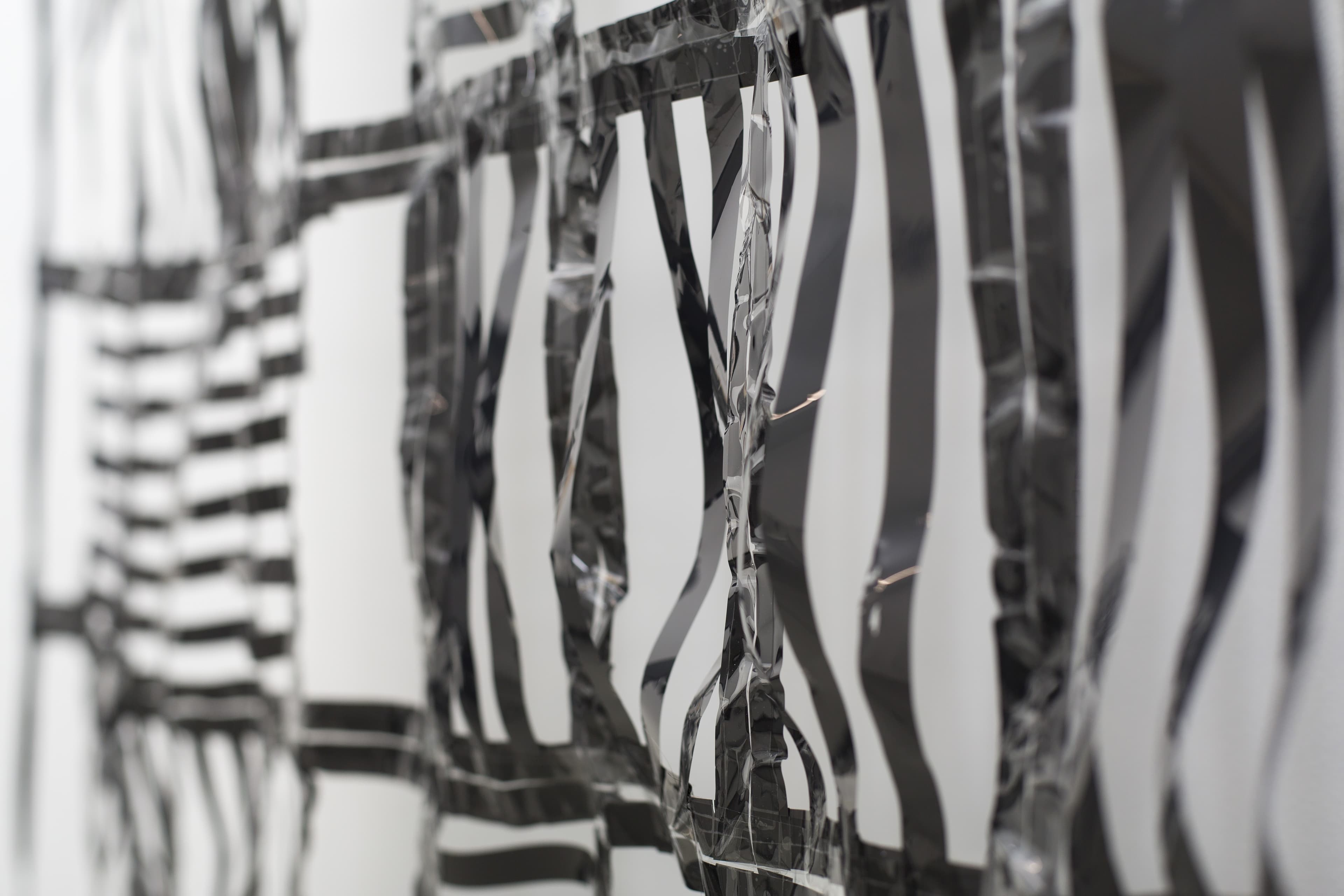
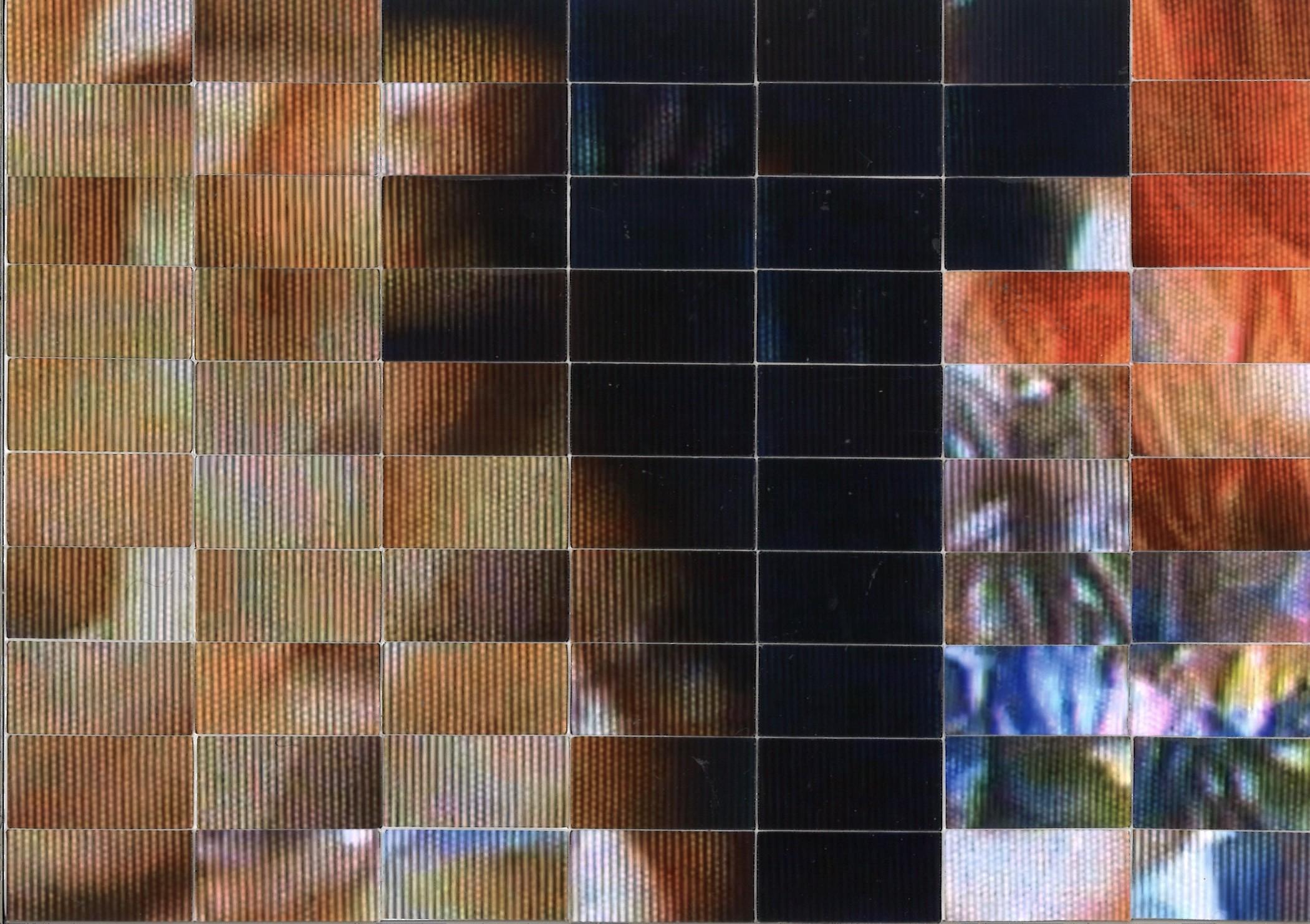
The VHS tape is definitely a curious material. It is fragile, and prone to disintegration the more it's handled, but I’ve leaned into the tape’s ability to materialize the accretion of gesture. My touch becomes tangible, and the tape wears the evidence of manipulation. I'm a little bit more lasé faire with my work, and I often find possibilities in mistakes. For example, if I mis-tape a section the film comes off with the tape when it's removed, and the work becomes more about removing information or changing the sequencing.
Similarly, I think about the destruction of sequencing in my most recent film works. Using doll furniture, I document curated living room scenes using materials from my childhood. I manipulate the image by transferring between digital and analog methods, each time losing some fidelity and details from the beginning image. Starting digitally, I capture the backdrop for play. Using a VCR, I record the image to play on a VHS cassette. A final digital documentation is excavated from the VHS cassette and preserved digitally. This process allows me to archive as I watch my most treasured items of my childhood age alongside my body. Preserving them as I recorded the many productions of Spice Girls songs, scenes from The Lion King, and screenplays that I wrote with my friends on home videos.
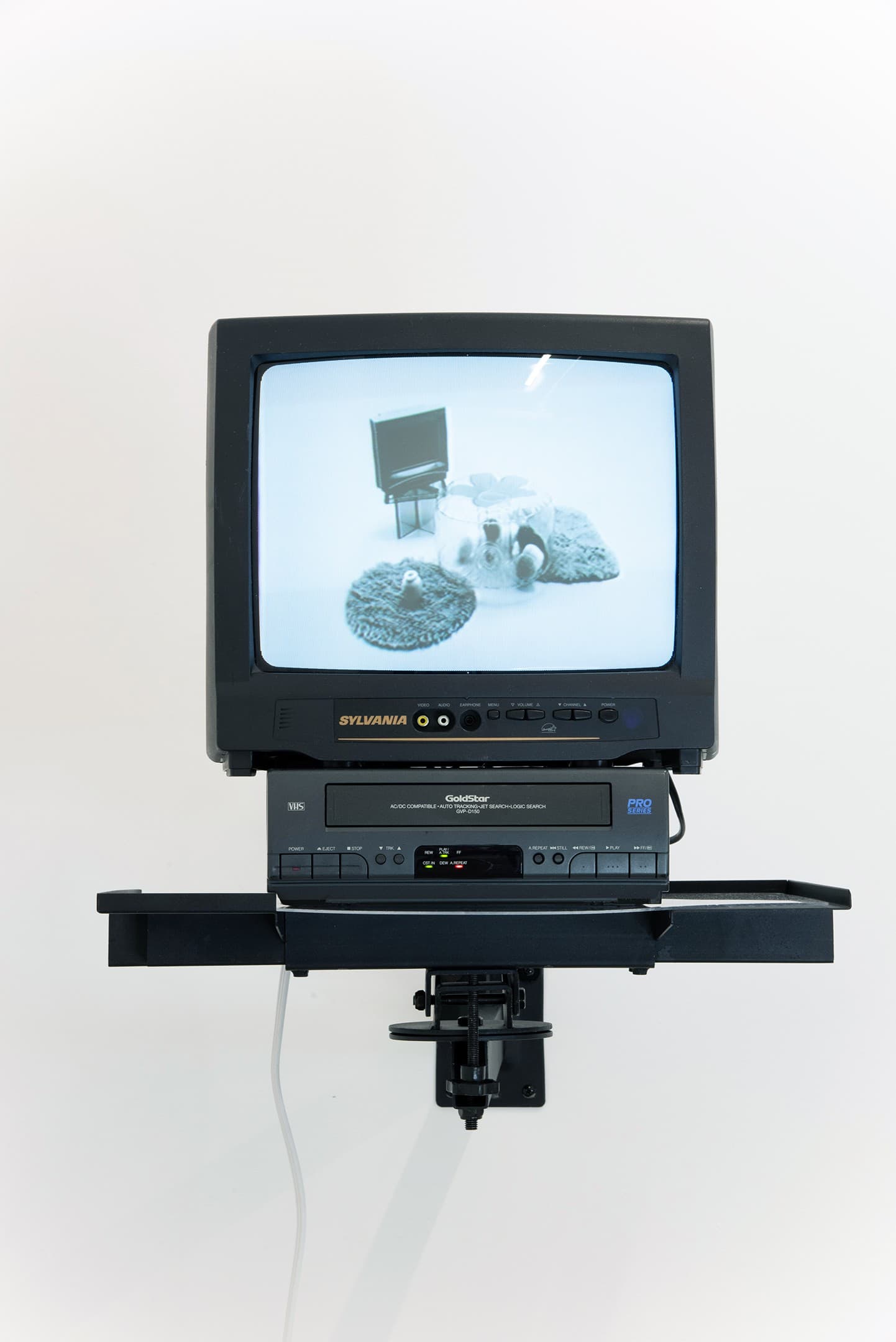
OPP: Can you talk about the VHS Quilting works?
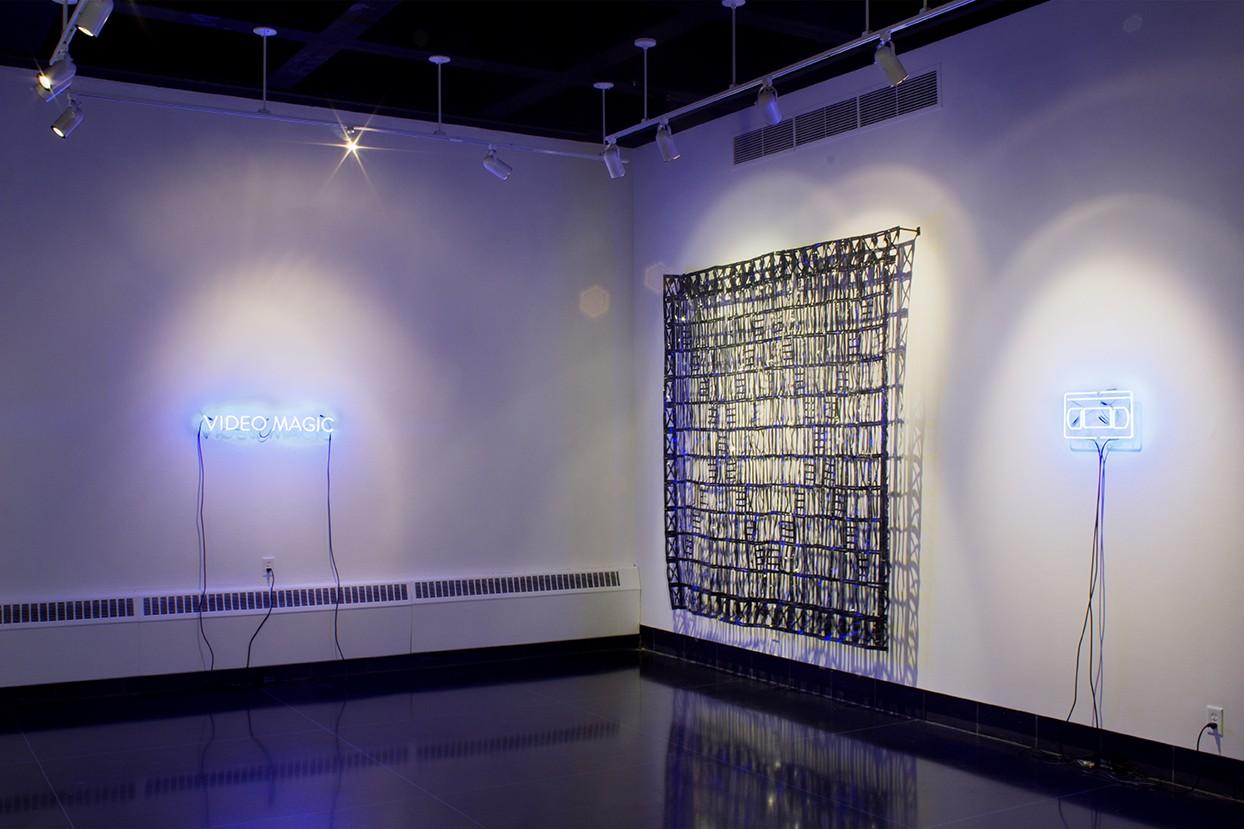
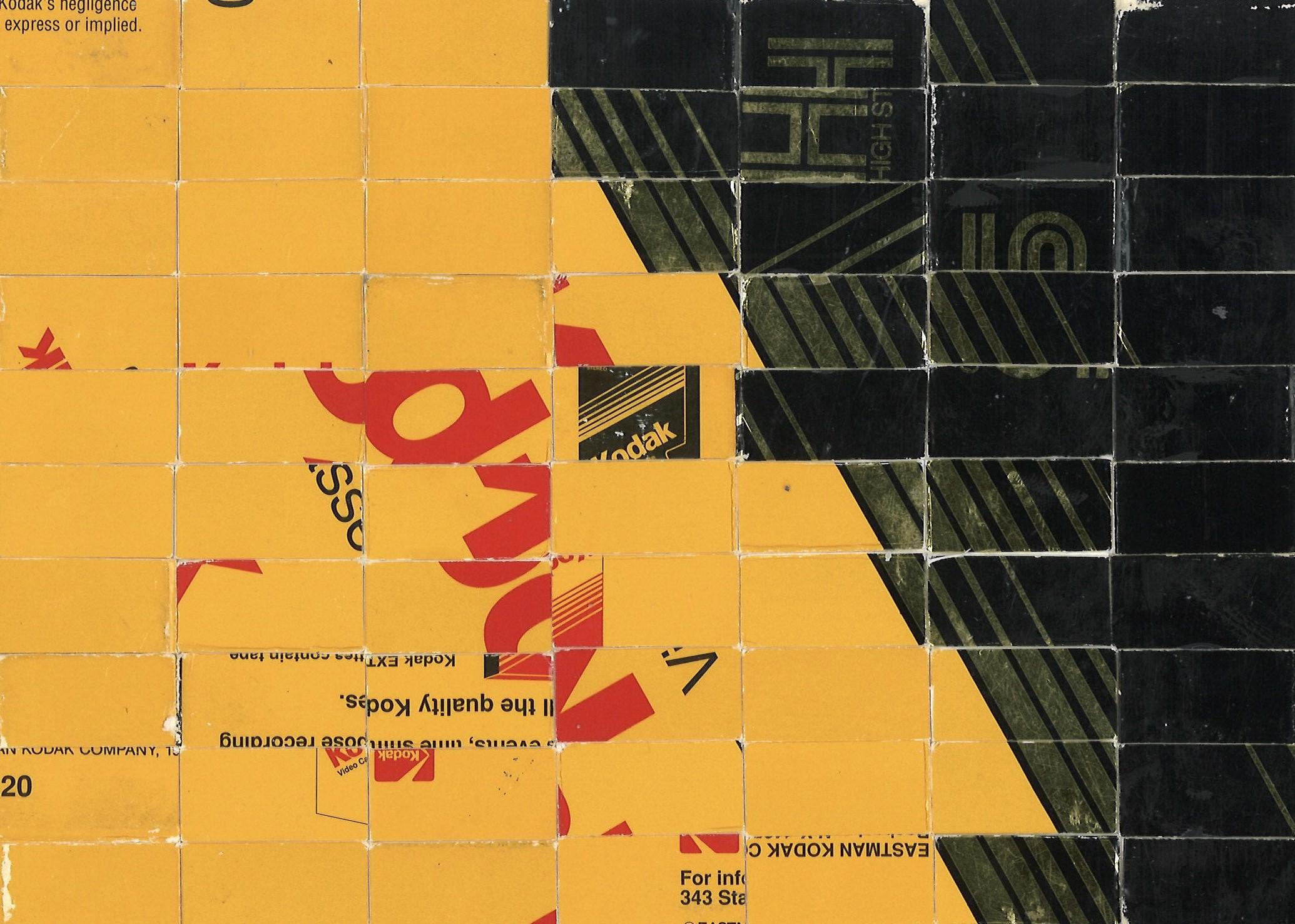
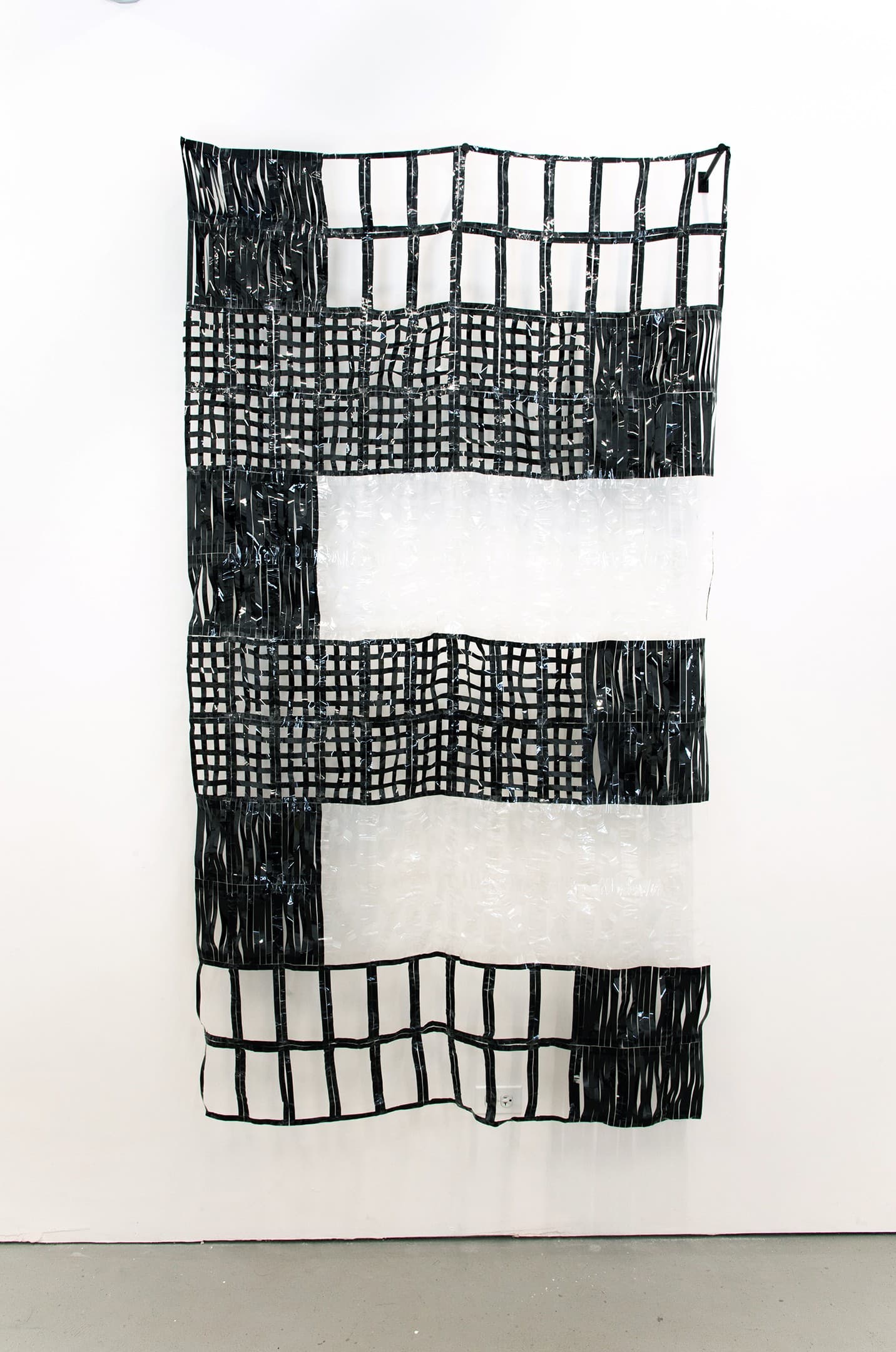
RG: I started calling them quilts in graduate school. I was thinking about comfort items and looking at a lot of quilt patterns to guide my formal arrangements. Each piece is made from one movie, and each square is the dimensions of an individual tape. They take their title from the film, and when they are together I see them as the choices on display at the video rental store.
OPP: I’m curious if there was an overlap in timing between your mother's illness and the fading of VHS technology. Your work brings to mind the impending inevitability of new technologies usurping the old. Video rental stores struggled then seemingly disappeared overnight, and I think of our human impulse to seek comfort in fantasy or other stories in such moments of monumental shift.
RG: My mother was diagnosed at such a young age, so I have always been a caretaker in some capacity. I was also surrounded by the tapes, so these two things are inextricably linked for me. I'm super close with my mom, and my work is a way of looking at my mother through this material.
I have formative recollections of being in the video rental store and causing mischief, but these memories are fragmented. Then my mother was diagnosed, and very shortly after we had to close the store. I’ve seen so many come and go, and the last store I found was in COVID. I constantly seek them out, and perhaps there is some part of me yearning for an intimacy with those fragmented memories, or attempting to preserve something long lost. Most people don't watch these tapes anymore, but I do. For some they are just taking up space in the basement, but I’m finding a way to transform something important to me through this process.
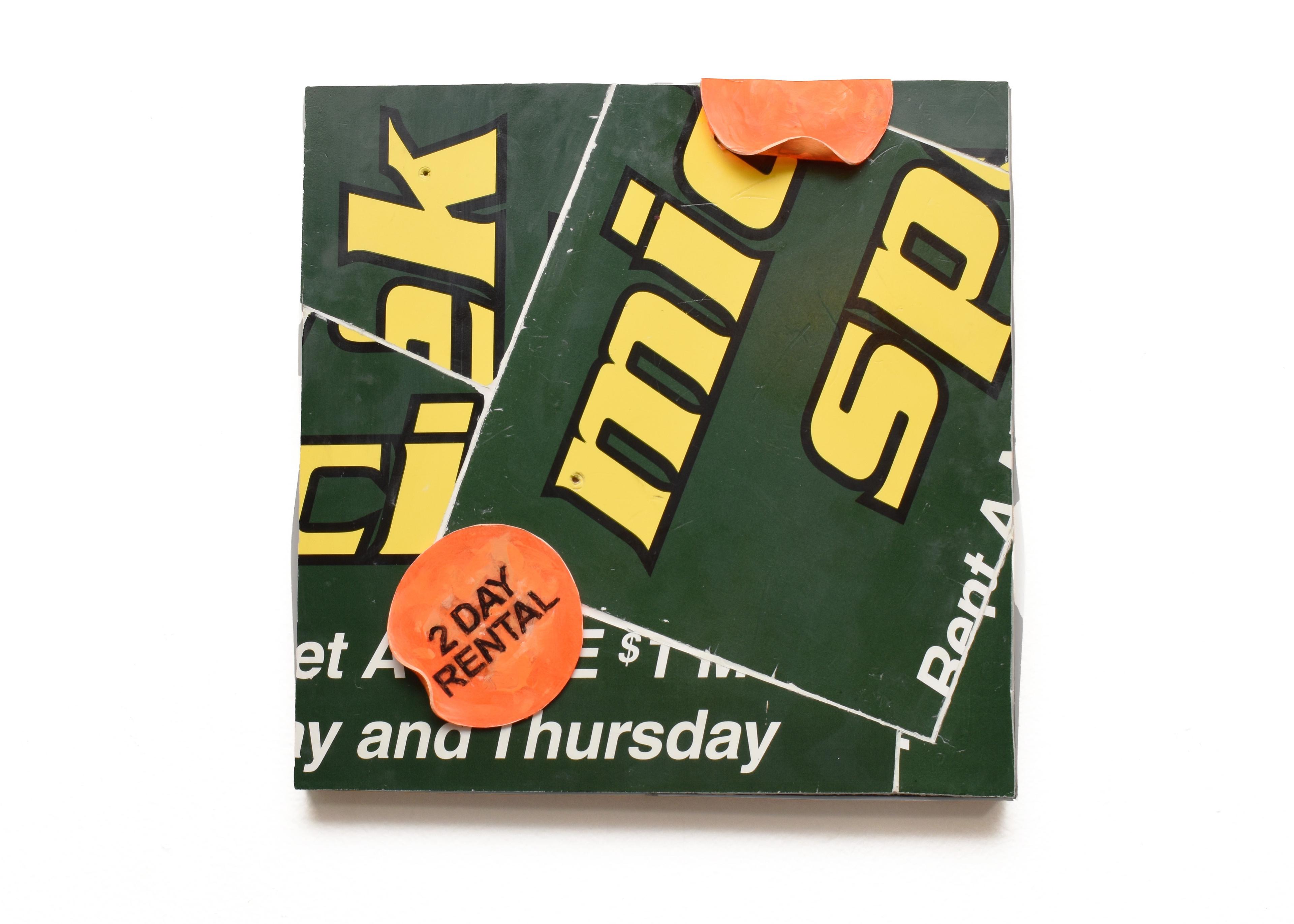
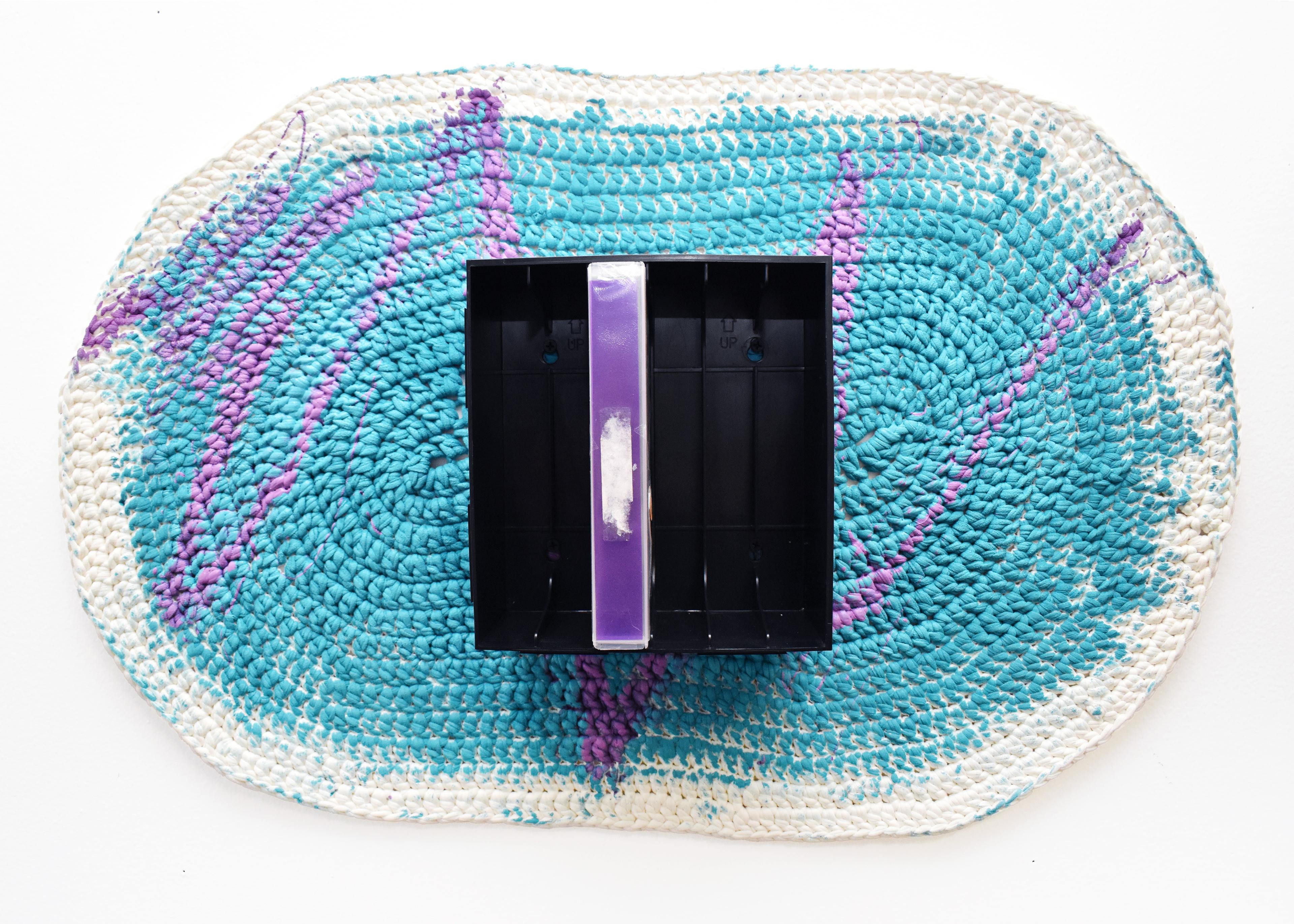
OPP: I adore the inclusion of crayon and Shrinky Dink in your flat canvas type works. There are devices we use as parents to keep our children entertained, sort of echoed in the ways we find to occupy ourselves as kids. The carpet, too, feels very of this moment and our childhood proximity and relationship with the floor as a surface.
RG: This past year I've been looking at my work and adding different materials from my childhood. I'm not a mother myself, but I am an educator and I have taught young kids and these materials are things that I still use. I was previously speaking about coloring on the floor, and I remember Harriet The Spy came out with these cool decoder markers. I remember trying to figure out how to work them, and quickly going back to my crayons! I love the waxiness and the freedom one feels when drawing with them, and I think they are seriously underrated. As an adult, it's difficult to not overthink mark making. Crayons, chalk pastels, or even a marker help me loosen up, and Shrinky Dinks are just fun! Sometimes it's just about pure enjoyment.
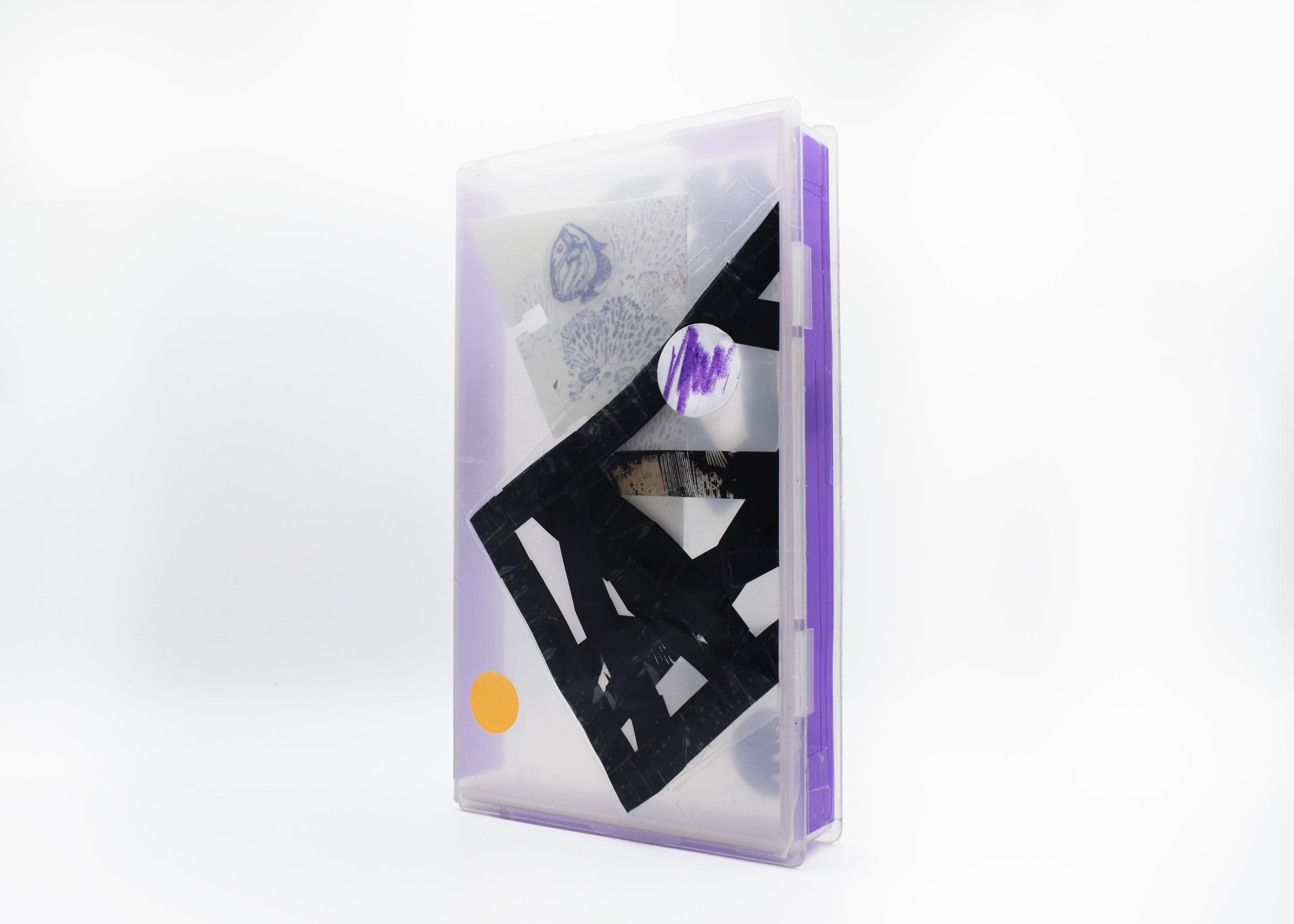
OPP: Your modes of presentation off the wall are ingenious. The use of everyday, albeit time specific, mounting mechanisms–the sidewalk poster displays and wall TV monitor displays to name a couple. They're absolutely functional, yet they're also crucial to the read of the work. I find this balance extremely tricky in my own sculpture practice. Can you talk about this foray into sculptural iterations?
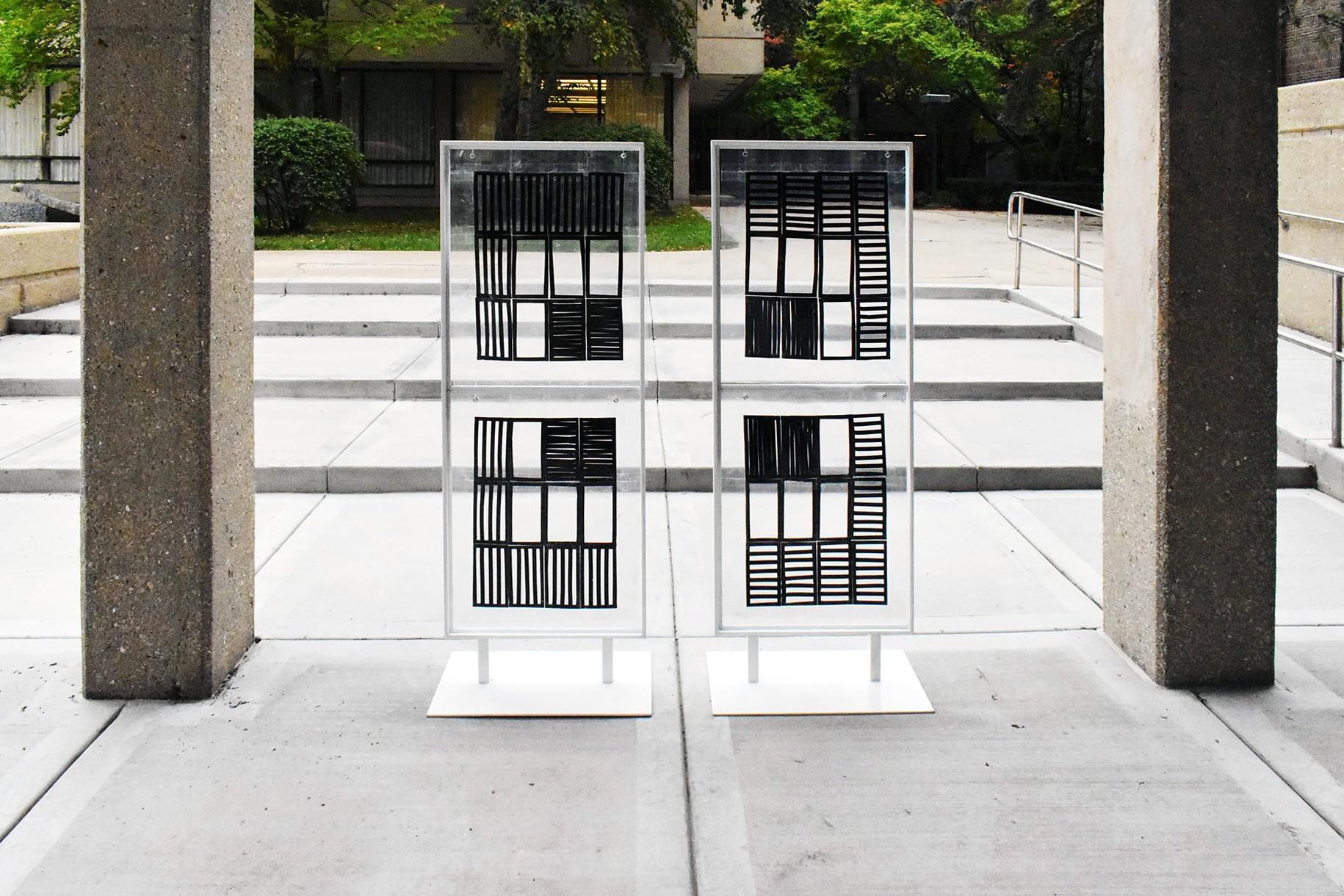
RG: When I first started making the quilt pieces I struggled with display. I want you to breathe with these works. If I’m able to lift them off the wall, when you breathe, they breathe. I had a professor at the time that challenged me to try metalworking, so I started welding these mounts. It not only allowed me to play with light in the studio, but they became somewhat confrontational. As for sign displays, I have always found these things interesting. I was invited to participate in Terrain last season, and the long-term outdoor presentation was an interesting challenge. The movie poster display became a solution that was practical, but it's also an object that definitely fits within my work.
OPP:I see a lot of mass-produced materials in your work. The word cheap comes to mind, but without any of the negative connotation. I see a lot of great care, as if they're precious and irreplaceable, almost elevated to the level of a relic.
RG: I definitely think of them as precious. Although they were very cheap to make and mass produced at one point in time, today they are scarce and difficult to find.
OPP: And finally, would you talk about your curatorial practice and the running of an art gallery? How do these endeavors intertwine with your personal art practice?
RG: A group of us from graduate school along with a few other connections were seeking community after school. I had a hard time during this transition, and I even stopped making work for a while. Forming the collaborative gave me that community and brought me back into my art practice. There’s no way I’d be as prolific without it.
We started Purple Window Gallery three years ago. It's currently made up of nine members, and we try to run it as democratically as we can. It’s important to just have a space where we can do whatever we would like, so we take turns showing or curating and the rest of the group is there to support. Lately we’ve been focused on broadening and injecting outside perspectives into the gallery. We’re in the middle of doing a gallery exchange with The Waiting Room (formerly Beco Gallery) out of Kansas City, and we have a similar project in the works with STNDRD Exhibitions in Granite, Illinois. It’s been really exciting to see Purple Window expand and flourish, and it's all about the people behind it!
To see more of Rebecca's work, please visit www.rebeccagriffithart.com.
Featured Artist Interviews are conducted by Chicago-based artist Lillian Heredia. When she’s not creating for OtherPeoplesPixels, Lillian makes work that grapples with past experiences with religion, sustenance farming, chronic pain and motherhood through the lens of her background in biology. Her work has been shown at The Ukrainian Institute of Modern Art, Lillstreet Art Center, SAIC Galleries, Woman Made Gallery, The Martin, Purple Window, SITE Galleries, and Circle Contemporary. She received a Bachelor of Science in Biology in 2011 and recently completed a Bachelor of Fine Arts at the School of the Art Institute of Chicago with an emphasis in sculpture. Lillian is a recipient of the Presidential Merit Scholarship and has been a finalist in the Pinnacle Awards and the Documentary Family Awards. Her work is currently featured on Comfort Station’s Artist to Watch series, and she is an artist in residence with 3Arts/Bodies of Work.